By: Wilber Tumutegyereize. Aka. The Duke of Kigezi
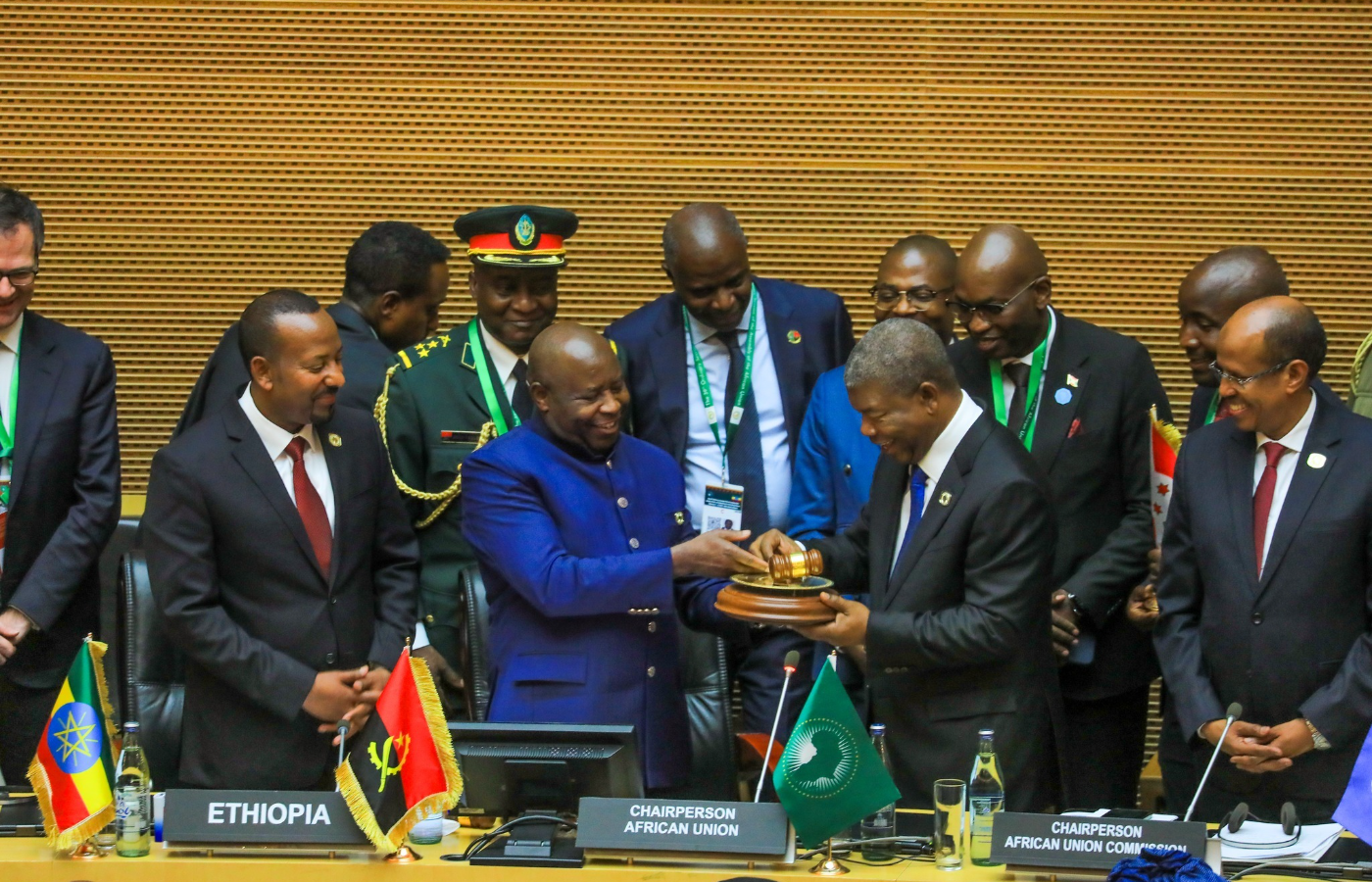
Kampala, Uganda – In February 2026, at the 39th Ordinary Session of the Assembly of Heads of State and Government of the African Union (AU), H.E. Évariste Ndayishimiye was formally elected Chairperson of the continental body for the year 2026, assuming one of Africa’s most prestigious leadership roles. This leadership transition, part of the AU’s rotating chairmanship system, sees Burundi preside over the Union’s agenda and summits for 12 months, with the power to shape continental priorities, influence diplomatic direction, and advocate on global issues affecting Africa.
Ndayishimiye succeeded President João Lourenço of Angola, and pledged to lead the Union “in a spirit of listening, impartiality, and cooperation for the good of all Member States,” laying out a platform centred on unity, continental stability, and sustainable development.
This appointment marks a significant milestone for both Burundi and African politics, reflecting broader transformations of leadership in the Great Lakes region and the continent’s evolving diplomatic landscape.
Roots of Leadership
Born on 17 June 1968 in Giheta, Gitega Province of central Burundi, Évariste Ndayishimiye’s rise to national and continental prominence is rooted deeply in the country’s recent history.
His early adult years were shaped by the turmoil of the Burundian Civil War, where he joined the National Council for the Defense of Democracy – Forces for the Defense of Democracy (CNDD-FDD) rebel movement amid ethnic conflict. After the 2002 peace accords, he transitioned into the newly unified national army, rising rapidly through the ranks.
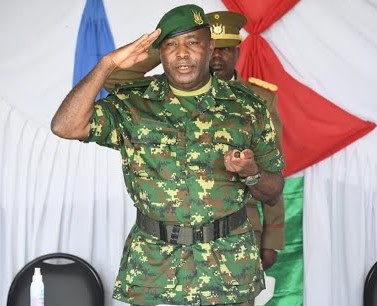
Ndayishimiye subsequently held key positions — including Minister of Interior and Public Security and senior advisory roles in the presidency — before becoming Secretary-General of the CNDD-FDD, the ruling party, from 2016 until his presidential bid. His relationship with his predecessor, Pierre Nkurunziza — who endorsed him as successor — and his steady rise through the political and military hierarchy, positioned him as a central figure in Burundi’s governance.
In June 2020, Ndayishimiye won the presidential election with a commanding majority, formally becoming the 10th President of the Republic of Burundi after the death of his predecessor, Pierre Nkurunziza
Regional Diplomacy and AU Roles Prior to 2026
Ndayishimiye’s ascent to AU chairmanship did not occur in isolation. His engagement at continental and regional levels — notably as First Vice Chairperson of the AU (2025–2026) — underscored Burundi’s growing diplomatic involvement. This position, which traditionally precedes the chairmanship, allowed him to build relationships across the continent and acquaint himself with the Union’s governance dynamics.
In addition, in July 2025, he was appointed Special Envoy of the AU to the Sahel region, tasked with guiding continental engagement with governments and civil society to foster peace, stability, and humanitarian cooperation across a crisis-affected region. This role signalled trust in his political experience and diplomatic acumen.
Burundi’s expanding diplomatic footprint reflects both a strategy of active participation in African multilateralism and a broader repositioning from the isolationist period that preceded Ndayishimiye’s presidency.
Rotational Leadership and Regional Balance
The AU chairmanship rotates annually among regional blocs — Central, East, West, North, and Southern Africa — ensuring equitable representation. Burundi’s turn in 2026 aligns with the Central African region’s rotation, building on Ndayishimiye’s vice chair role and regional engagements in bodies including the East African Community.
This rotation reflects the AU’s commitment to geographic balance and inclusivity, providing smaller states with a platform to assert continental influence. Ndayishimiye’s chairmanship thus epitomises not just individual achievement, but institutional design aimed at distribution of leadership across the African Union’s diverse membership.
Burundi’s Growing Role in Continental Peace and Security
Peace and security concerns remain central to the AU’s agenda, from conflicts in the Sahel to crises in the Horn and Great Lakes regions. Ndayishimiye’s prior engagement and Burundi’s contributions to peacekeeping and regional diplomacy — including in contexts such as the eastern Democratic Republic of the Congo — bolstered his profile as an interlocutor capable of contributing to continental stability.
Leaders at the AU summit noted the urgency of addressing violent extremism, unconstitutional changes of government, terrorism, and humanitarian crises, and expressed support for Burundi’s leadership to contribute to solutions.
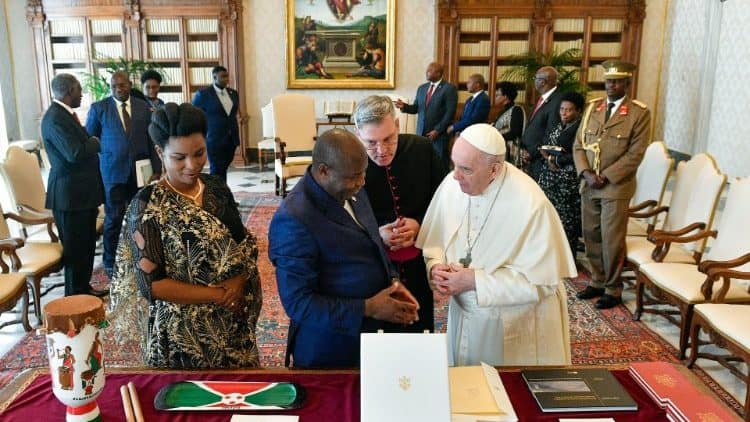
Diplomatic Trust and Consensus
In a Union often divided by competing interests and external pressures, Ndayishimiye campaigned on consensus-building and impartiality. His acceptance speech emphasised cooperation over partisanship — an appeal to unity amidst increasingly complex continental politics.
Leadership Priorities as AU Chair
As chair, Ndayishimiye inherits a packed agenda. At the heart of the 2026 AU theme — “Ensuring sustainable water availability and safe sanitation systems to achieve the goals of Agenda 2063” — lie some of Africa’s most pressing developmental challenges.
His priorities include:
- Water and Sanitation: Strengthening continental efforts to ensure access to clean water and sanitation — underlying determinants of health, productivity, and human dignity.
- Peace and Security: Championing diplomacy and conflict resolution mechanisms, with particular focus on regions of entrenched instability.
- Economic and Institutional Reform: Advocating for strengthened AU institutions and coordination with Regional Economic Communities (RECs) to enhance effectiveness and sustainable financing.
- Representation in Global Governance: Supporting Africa’s collective push for equitable representation in institutions such as the United Nations Security Council.
While the AU chair’s role is considered partly ceremonial, it carries significant convening power, diplomatic influence, and the ability to frame policy debates — particularly when backed by committed leadership.
Transformations under His Presidency in Burundi
Burundi’s experience under Ndayishimiye’s presidency over the last six years provides a lens on the blend of domestic governance and regional leadership that now informs his AU role.
Security and Stability
One of the most notable challenges faced by Burundi upon his accession in 2020 was internal insecurity linked to legacy conflicts and armed groups. While stability has improved compared with the civil war era, Ndayishimiye has prioritised security consolidation, strengthening state institutions, and contributing to regional peace mechanisms.
Economic Reforms and Development
Burundi, under president Ndayishimiye has seen a great economic transformation.
Under Ndayishimiye’s leadership:
- Economic Engagements: The government has pursued rapprochement with international partners — such as reaching out to Bretton Woods institutions after years of tenuous relations — and sought investment to modernize infrastructure.
- Infrastructure Projects: Large infrastructure projects — including hydroelectric stations and transport initiatives — aim to enhance access to power and connectivity.
- Rail and Regional Integration: Partnerships, including Chinese-backed rail infrastructure linking Burundi to Tanzanian ports, are designed to improve trade flows and economic diversification.
Health and Education
In the health sector, investments have focused on expanding service delivery and modernizing facilities, including the inauguration of new hospital infrastructure. These improvements underpin efforts to raise care quality and coverage, critical in a country where public health systems have long been strained.
Unlike the past years where Educators and civil society highlighted challenges in education quality, teacher retention, and funding — Ndayishimiye’s government has worked tooth and nail to make this a thing of the past.
Bilateral and Multilateral Relations
Ndayishimiye’s foreign policy has emphasised diplomatic engagement after a period of international isolation. Notable actions include extensive state visits, participation in regional forums, and leadership roles in continental initiatives — moves that parallel Burundi’s reintegration into global development dialogues.
His international stature, further elevated as AU chair, positions Burundi as a more engaged partner in African and global policy settings.
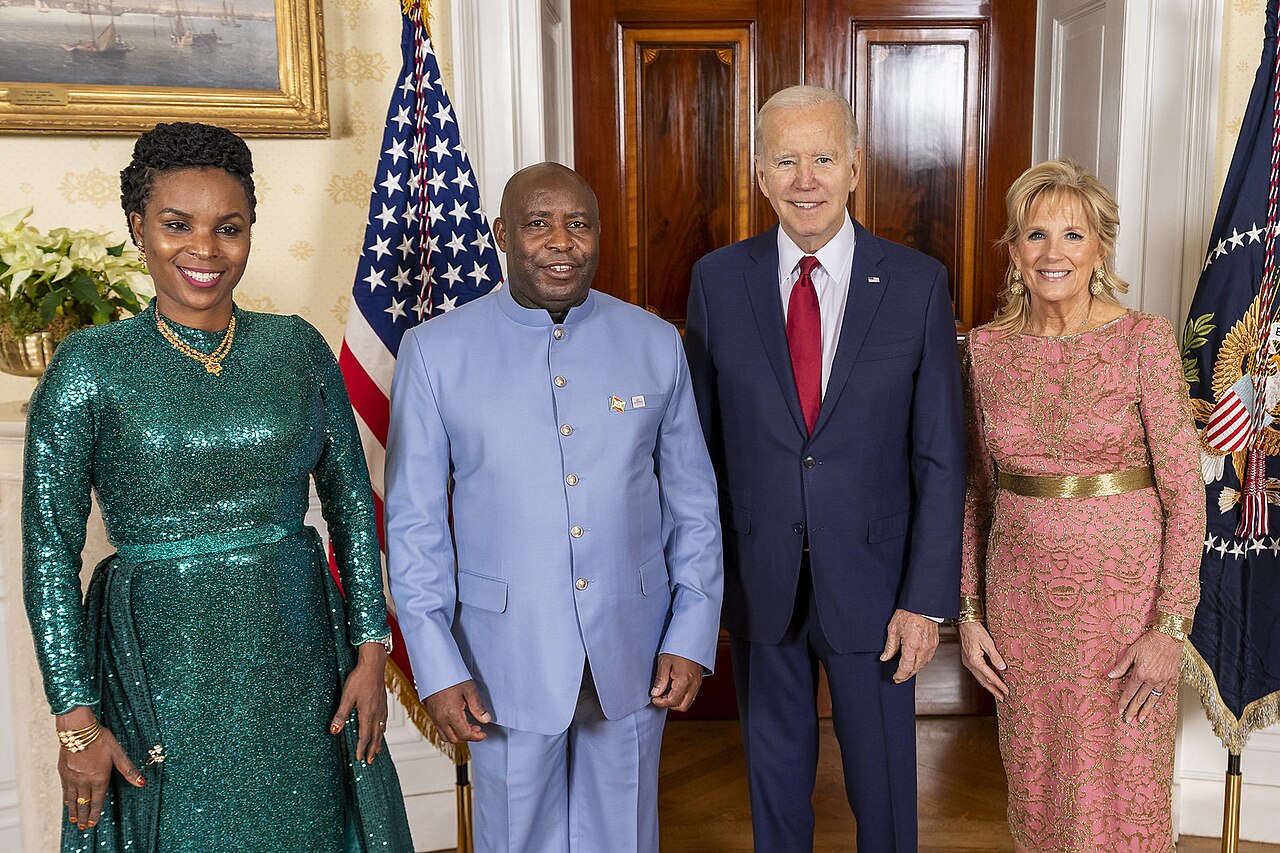
Ndayishimiye with President Joe Biden, Jill Biden, and Angeline Ndayishimiye in 2022
Implications for Africa and Burundi
Ndayishimiye’s AU chairmanship affords both opportunity and scrutiny:
- For Africa: His leadership may influence peace and security dialogues, strengthen cooperative approaches to development challenges, and support institutional reforms within the AU.
- For Burundi: The chairmanship amplifies the nation’s diplomatic profile, opens doors for enhanced bilateral cooperation, and symbolizes confidence in Burundi’s political stability.
H.E. Évariste Ndayishimiye’s assumption of the AU chairmanship in 2026 is far more than a ceremonial role; it reflects Burundi’s evolving place within African governance, and the Union’s commitment to inclusive leadership and regional balance. From his early years in conflict, through national presidential leadership, to continental prominence, Ndayishimiye’s journey encapsulates both personal resilience and broader narratives of African leadership in an era defined by security challenges, development imperatives, and diplomatic realignment.
As he leads the AU for 2026, the continent watches a leader who has navigated the complexities of domestic reform and continental diplomacy — tasked now with steering Africa toward unity, sustainable development, and increased voice on the global stage.
