Makerere University Rolls Out Living Labs to Empower Communities in Cutting Greenhouse Gas Reduction
By: Joseph Mary Buwule, Umoja standard
Luweero District, Uganda — Makerere University, Department of Soil Science and Land Use Management at the College of Agricultural and Environmental Sciences (CAES), has launched community-based living labs under a regional project designed to promote green growth and reduce greenhouse gas emissions across East Africa.
The initiative, officially known as TORCH (Towards a Clean Energy and Zero-emission Society in East Africa), is funded by OeAD-GmbH under the Austrian Partnership Programme in Higher Education and Research for Development (APPEAR). The two-year project spans Uganda, South Sudan, and other partner institutions, aiming to strengthen collaboration between universities, farmers, and households to accelerate climate-smart innovations.
A Multi-University Partnership for Green Growth
TORCH brings together leading institutions including Makerere University, Busitema University, Kabale University, Ndejje University, and the University of Juba.
According to Dr. Patrick Musinguzi, the project’s Principal Investigator, the initiative seeks to close knowledge gaps around climate change, green growth, and sustainable energy transitions—both in academia and at community level.
“Green growth goes beyond theory. This project integrates universities with communities to empower people to understand greenhouse gas emissions and how they can reduce them at homestead, farm, and energy-use levels,”
— Dr. Musinguzi
He noted that, despite the growing threat of climate change to Uganda’s agriculture, food systems, and livelihoods, awareness of its drivers remains low. TORCH aims to enhance teaching, strengthen research, and boost community outreach to cultivate a generation of environmentally conscious citizens.
Living Labs: Taking Climate Innovation Directly to Communities
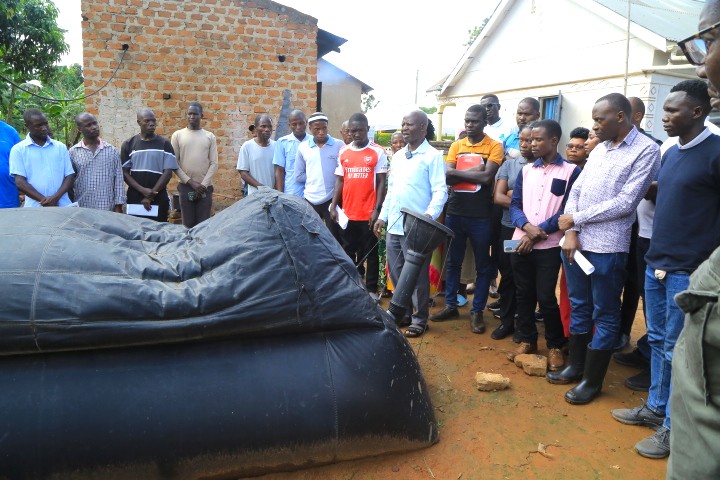
At the heart of the TORCH project are living labs—real-life learning and experimentation spaces where farmers, students, and researchers co-develop solutions to reduce emissions and improve sustainability.
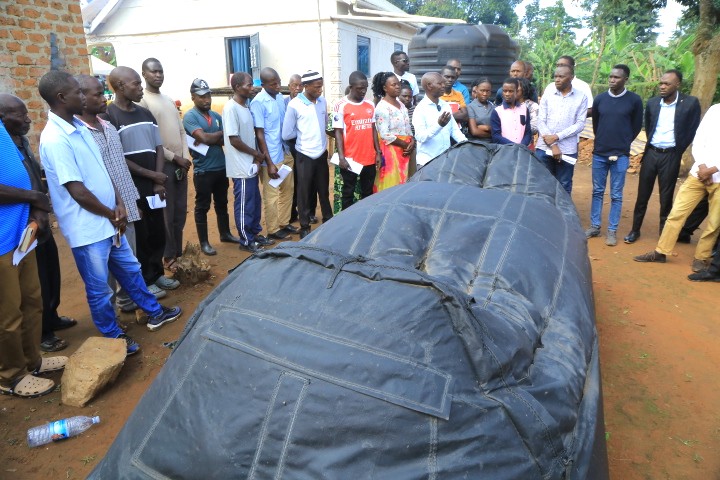
One of the first living labs has been established in Kawumu Village, Luweero District, hosted by farmers Mr. and Mrs. Kayanja. Here, multidisciplinary teams assess entire household systems, including:
- crop production
- livestock management
- energy sources
- soil and water use
- waste disposal and recycling practices
These assessments help identify opportunities to reduce carbon emissions and improve efficiency.
“At homestead level, emissions can be reduced through better soil management, improved livestock systems, use of clean energy like biogas, and efficient cooking and waste-management practices. Living labs enable us to co-create solutions with the people directly affected.”
— Dr. Musinguzi
Additional living labs will soon be set up in Soroti and Kabale, supported by partner universities that will conduct field research, hands-on training, and community sensitization.
Community Impact: Farmers Transition to Clean Energy
Early results from the Kawumu living lab show strong community interest and impact.
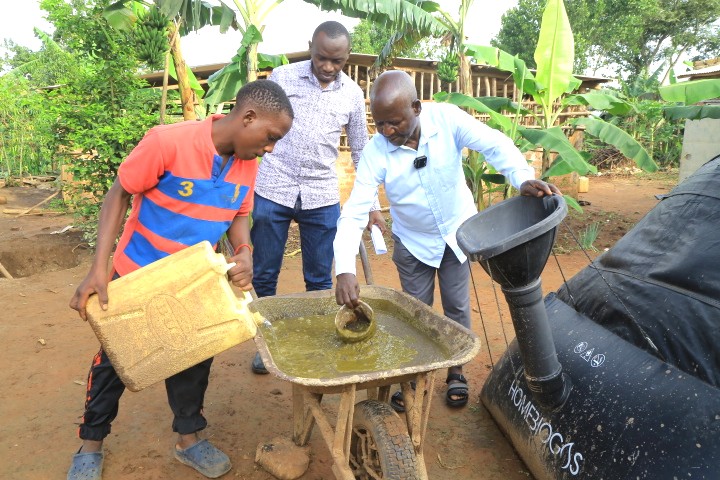
Mr. Kayanja Susane, one of the host farmers, reported that adopting biogas technology—introduced through the TORCH project—has significantly transformed his household’s energy use.
“Biogas has reduced the energy burden in our home. It is clean, reliable, and saves us from cutting trees. I now understand how small changes at household level can protect the environment.”
— Mr. Kayanja
He thanked Makerere University for extending the initiative to rural communities and called for its expansion, saying the project has the potential to positively influence thousands of households across Uganda.
Broad Objectives of the TORCH Project
TORCH aims to build capacity for green growth by addressing both academic and community-based needs. The project’s key objectives include:
- Integrating green growth and sustainability principles into university curricula
- Establishing three operational living labs in Central, Eastern, and South-Western Uganda
- Training students and community members through field practice, short courses, and targeted research
- Empowering women in science, technology, and environmental management
- Promoting innovative and low-carbon technologies at community level
- Supporting policy influence for climate-responsive development
- Strengthening regional networks and collaboration among East African universities
Research Priorities That Will Shape Innovation
To guide teaching, outreach, and scholarly work, the TORCH consortium has outlined priority research areas, including:
- Life-cycle analysis for household and farm emission sources
- Circular economy practices in rural settings
- Gender perspectives in green-growth transitions
- Livestock systems and their role in low-emission agriculture
- Measuring the emission impact of green technologies
- Barriers to adoption of climate-smart innovations
- Integration of indigenous knowledge into green-growth strategies
A Regional Drive Toward a Zero-Emission Future
Beyond Uganda, the University of Juba will coordinate activities in South Sudan, ensuring that the project benefits communities across the East African region. The consortium believes that TORCH will contribute significantly to regional climate action, clean energy adoption, and sustainable development strategies.
Dr. Musinguzi expressed optimism about the project’s long-term impact:
“Communities will become climate-smart, universities will strengthen green-growth education, and East Africa will move closer to a zero-emission future.”
