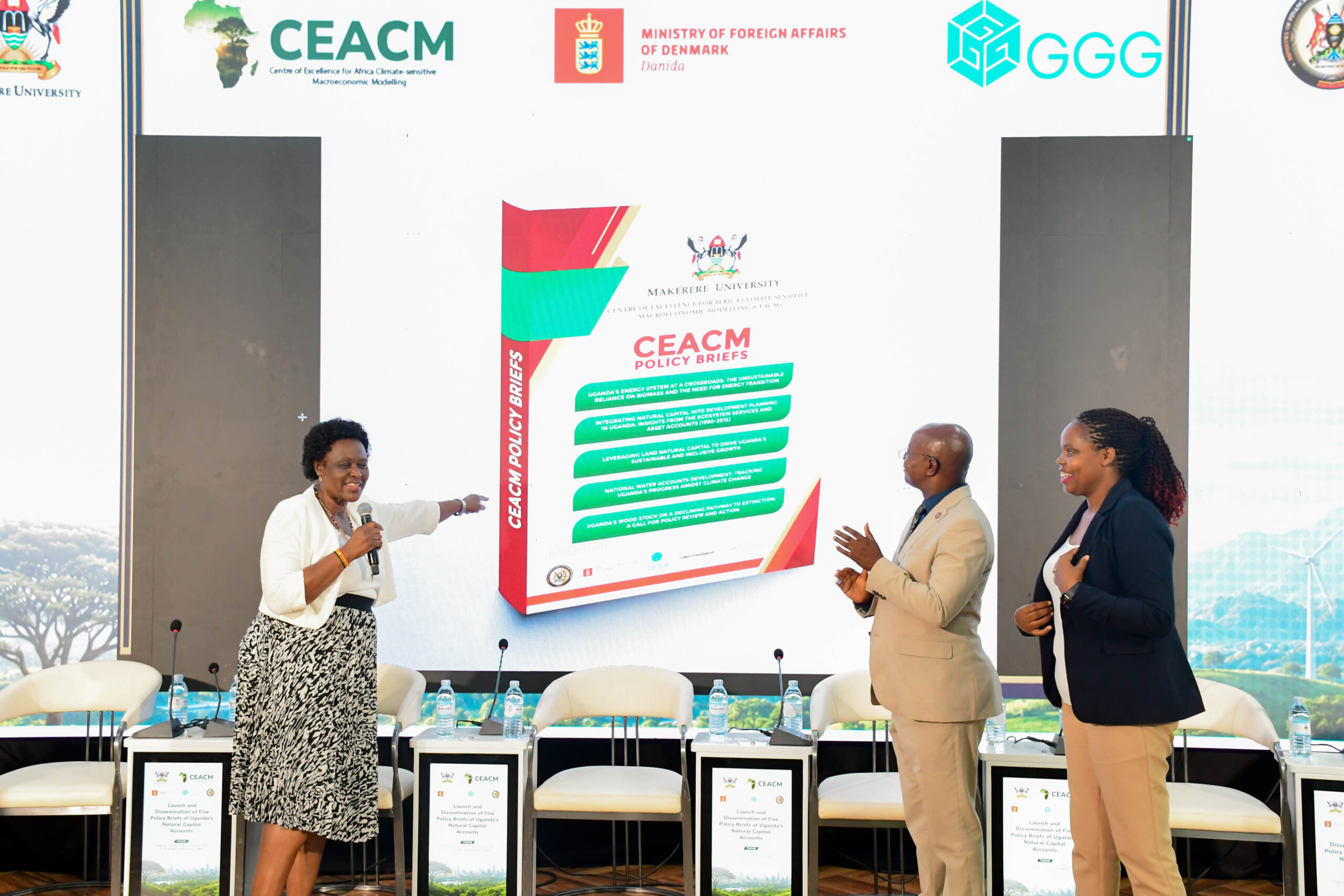
Water & Environment Minister Hon. Beatrice Anywar Launches Five Policy Briefs of Uganda’s Natural Capital Accounts. 📸Monica Meeme.
By Monica Meeme & Julius Mugaga | Umoja Standard.
Makerere University: The five policy briefs according to Dr. Peter Babyenda, the Coordinator of the Centre of Excellence for Africa Climate-Sensitive Macroeconomic Modelling (CEACM), were developed through a collaborative, participatory process involving key institutions.
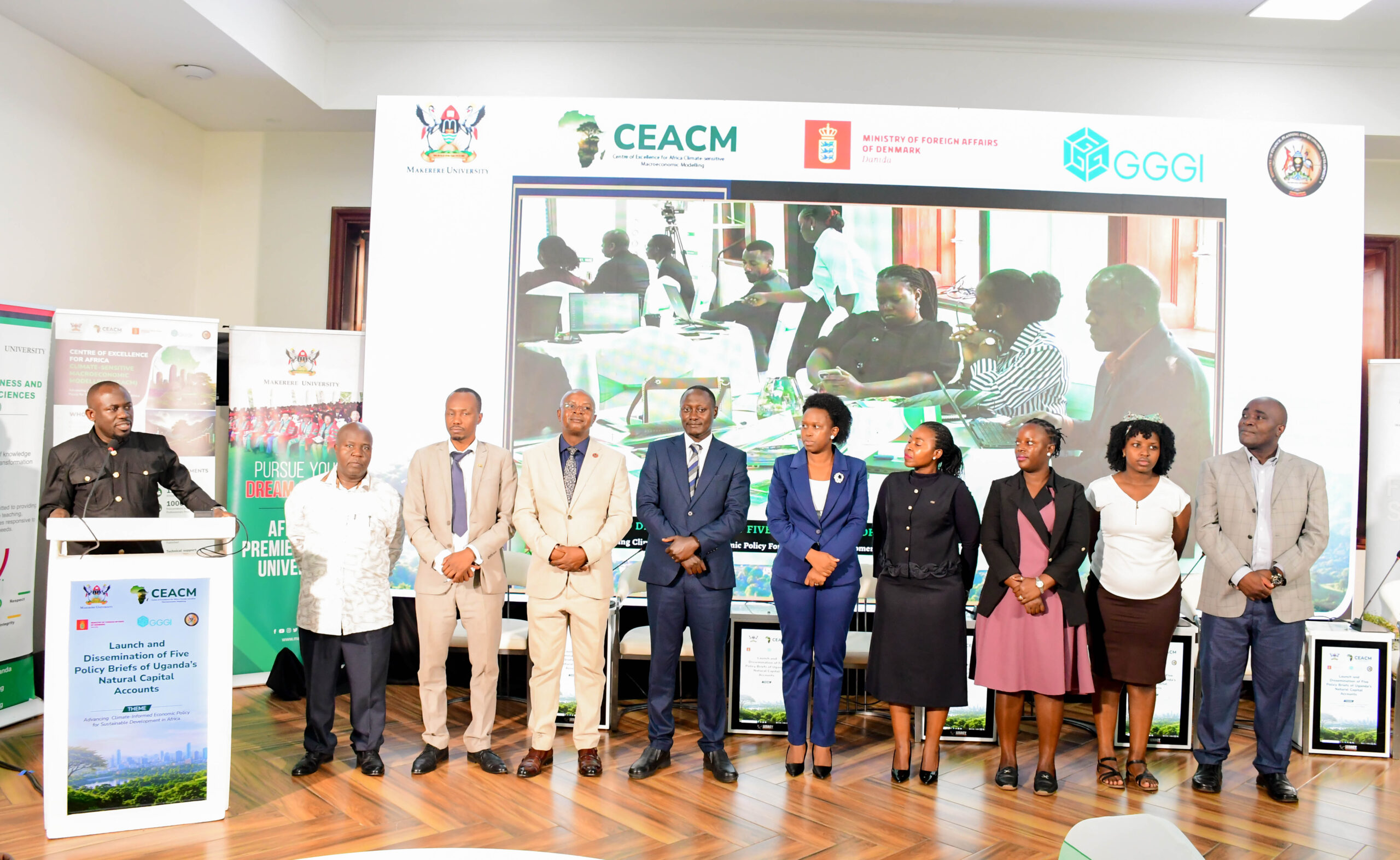
Dr. Peter Babyenda, the Coordinator of the CEACM at Makerere University College of Business & Management Sciences.📸 Monica Meeme.
The briefs address Uganda’s energy transition, declining woodstocks, natural capital integration into development planning, sustainable land use, and national water accounting amid climate change. These were developed through desk reviews and stakeholder consultations.
During the Launch and Dissemination of Policy Briefs of Uganda’s Natural Capital Accounts, the Director of the Centre and Principal of Makerere University College of Business and Management Sciences, Professor Edward Bbaale reveals, the centre was established to ensure climate change considerations are fully integrated into national planning, budgeting and macroeconomic policies.
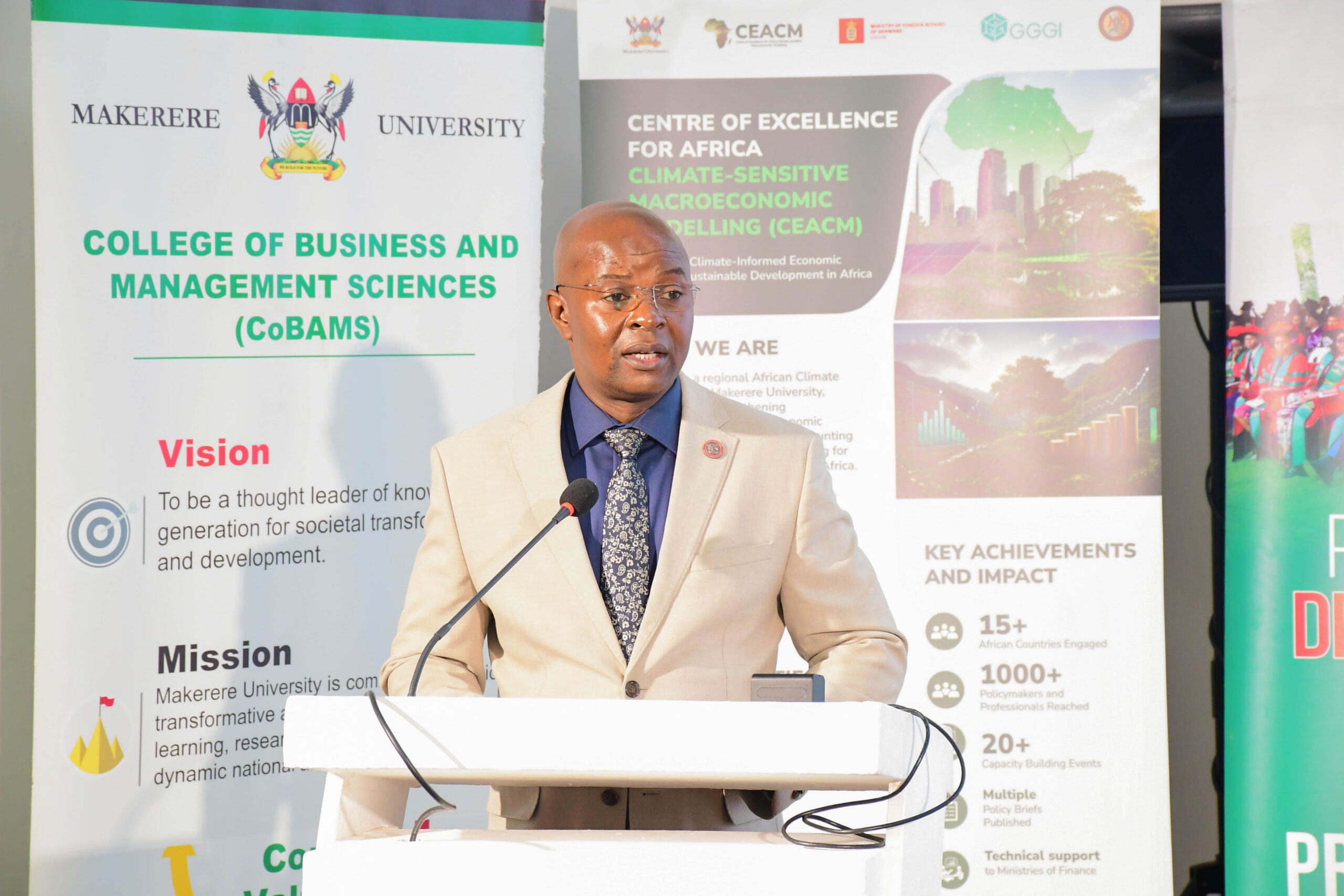
Professor Edward Bbaale, the Director of the CEACM &Principal of Makerere University College of Business and Management Sciences. 📸 Monica Meeme.
“We are very intentional in undertaking research and targeted capacity building that supports evidence-based policymaking,” he said adding that Makerere is aligning its work with global and Pan-African climate finance initiatives, positioning the University to support Uganda and the wider region through research, policy engagement and professional training.
At the launch, Minister of State for Water and Environment Hon. Beatrice Anywar urged Uganda to fundamentally change how it values and protects natural resources, saying updated Natural Capital Accounts strengthen conservation’s economic case.
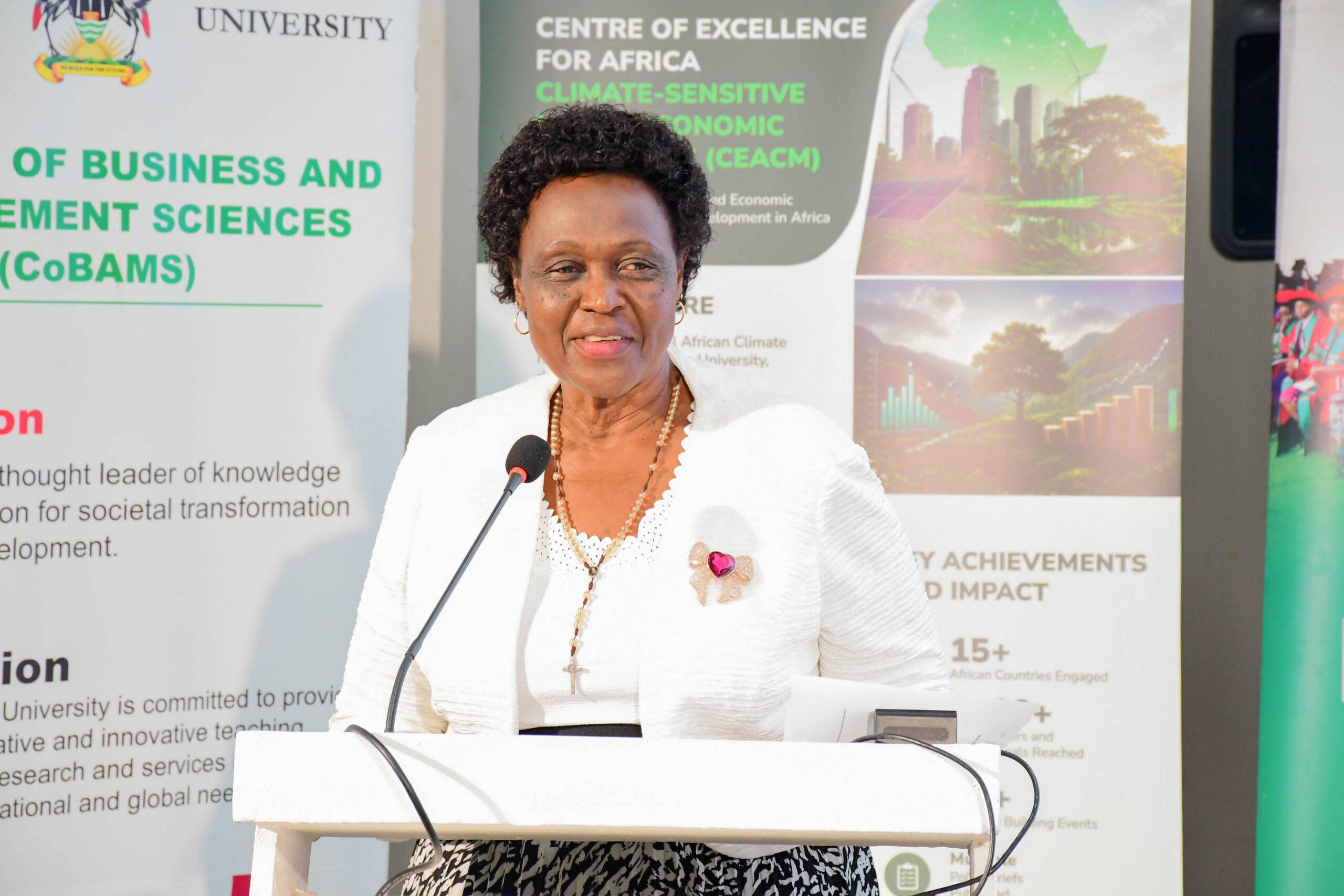
Hon. Beatrice Anywar, State Minister of State for Water and Environment.📸 Monica Meeme.
She said forests, wetlands, water and land must be valued for measurable contributions to the economy, livelihoods and development rather than seen as free resources.
The accounts provide credible data on value and condition for evidence-based planning and investment decisions.
Anywar stressed development and conservation can coexist and urged agencies, authorities and private sector to integrate natural capital accounting into budgets, while promoting awareness and participation.
On his part, Makerere University Vice Chancellor Professor Barnabas Nawangwe observed the importance of research-driven policymaking, describing the Centre of Excellence for Africa Climate-Sensitive Macroeconomic Modelling as vital to Uganda’s socio-economic transformation.
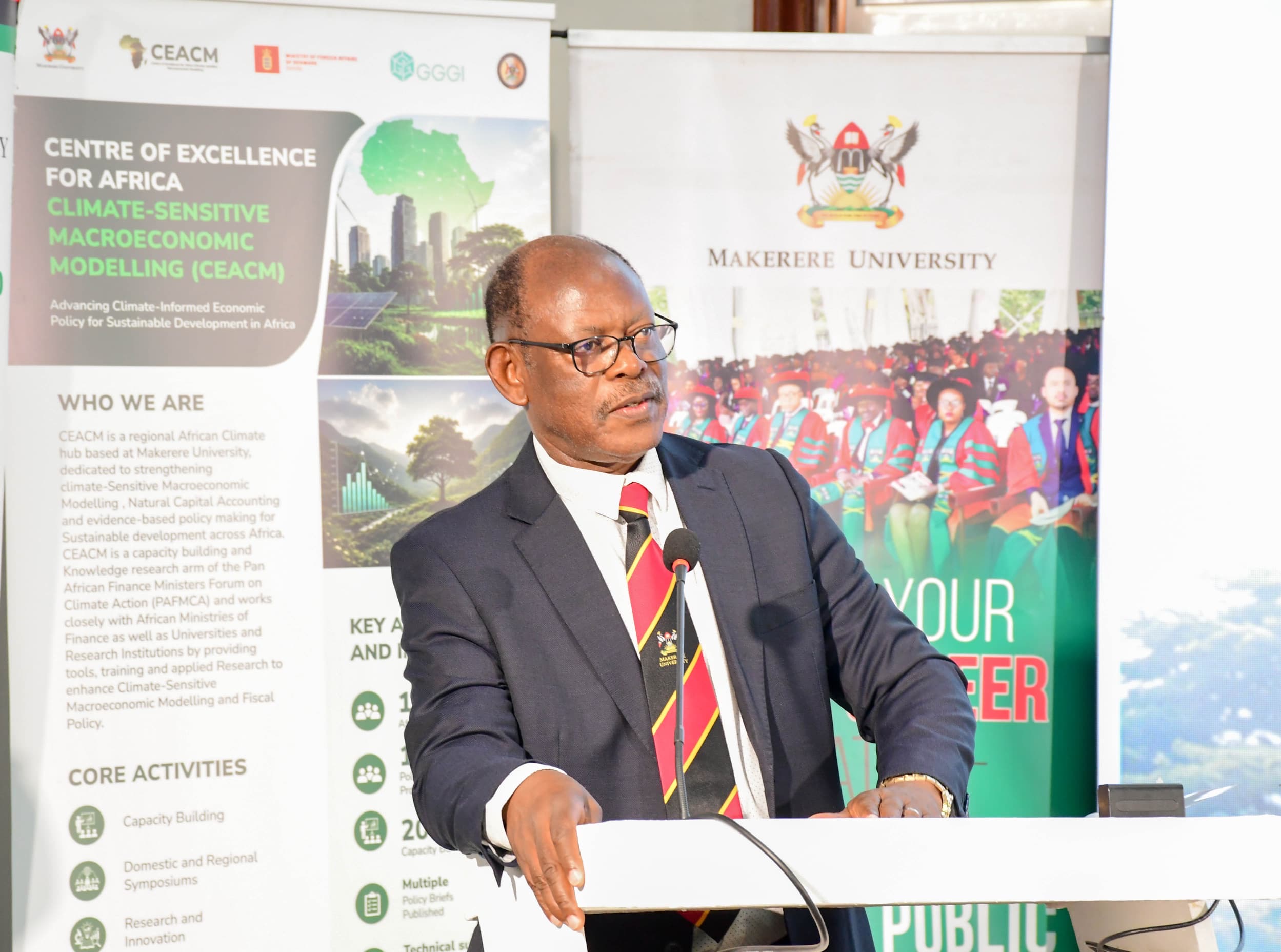
Professor Barnabas Nawangwe, Makerere University Vice Chancellor.📸 Monica Meeme.
He noted, the initiative reflects “the power of collaboration” among academia, government and development partners. He stressed that accounts covering water, ecosystem services, land, energy and woodstock support natural capital integration into planning, budgeting and investment.
Prof. Nawangwe said the Centre strengthens Makerere’s leadership in climate-sensitive modelling, builds young researchers’ capacity, and urged continued research to address climate change and population pressures.
Representative, Project Manager Climate Finance, Global Green Growth Institute (GGGI) Country Representative Arthur Ssebbugga-Kimeze said the launch of new policy briefs coincides with Uganda’s ongoing update of natural capital accounts led by UBOS, in collaboration with the Ministry of Finance and supported through the Denmark-GGGI partnership.
Arthur Ssebbugga-Kimeze, from Global Green Growth Institute (GGGI).📸 Monica Meeme.
He reiterated that Uganda’s forests, wetlands, biodiversity and water resources are critical economic assets whose protection will enhance resilience, improve investment decisions and support inclusive, climate-smart development while reinforcing the country’s regional leadership.
On the other hand, Ms. Nina Guldbeak Van Leeuwen, Team Leader for Politics, Regional Affairs and Refugees Support at the Embassy of Denmark in Kampala, praised Uganda’s leadership as co-chair of the Coalition of Finance Ministers for Climate Action. She said reliable natural capital accounts would strengthen macroeconomic modelling, green budgeting and public investment while supporting a just green transition.
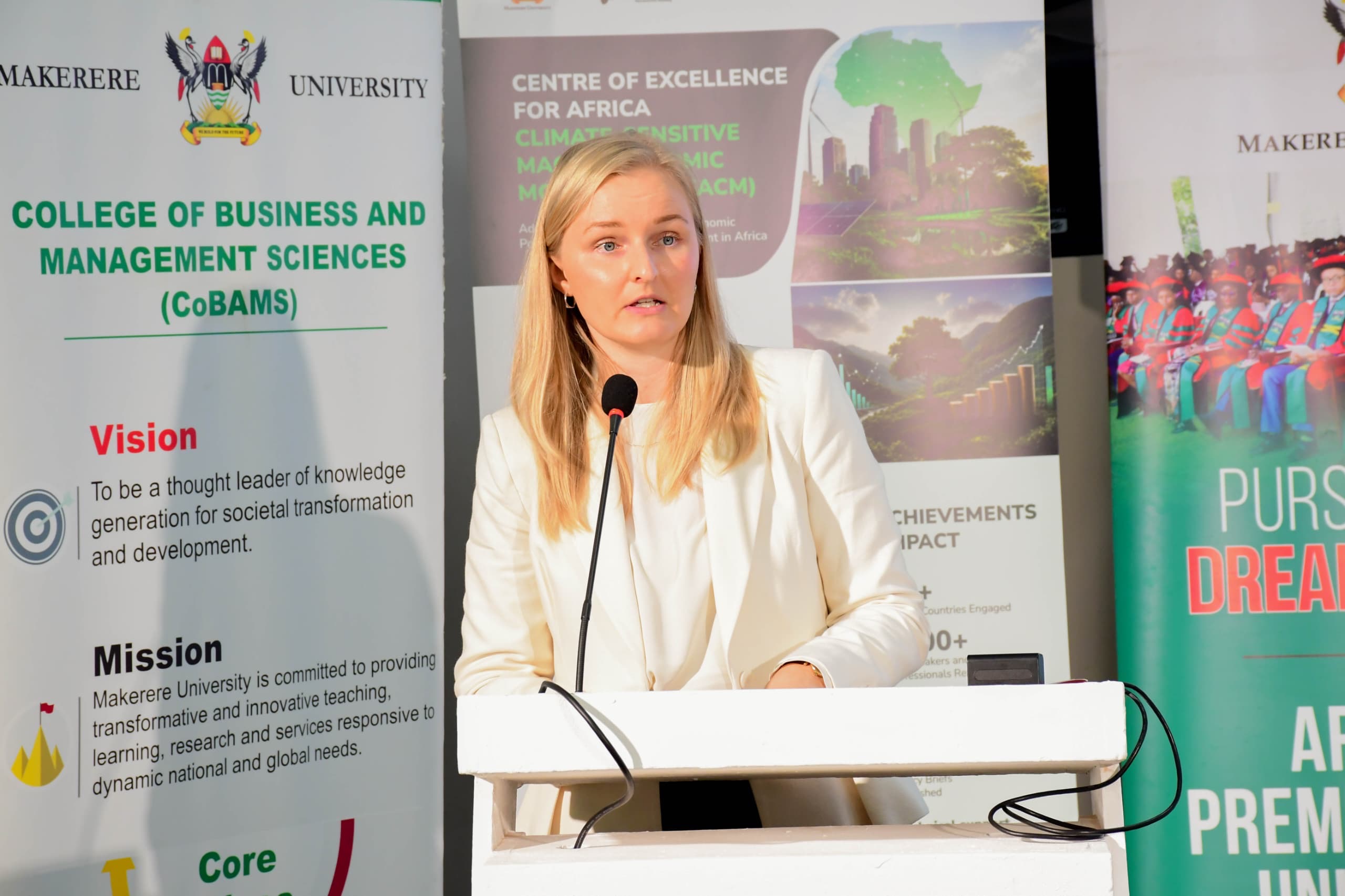
Ms. Nina Guldbeak Van Leeuwen, Team Leader for Politics, Regional Affairs and Refugees Support at the Embassy of Denmark in Kampala.📸 Monica Meeme.
Van Leeuwen also revealed Denmark’s expanded partnership with the Uganda Bureau of Statistics, Makerere University and the Global Green Growth Institute to improve climate data.
She urged policymakers to actively use the policy briefs, saying informed decisions are essential for achieving Uganda’s low-carbon, climate-resilient development ambitions.
From the technical wing, the Acting Commissioner for Macroeconomics Policy at Uganda’s Ministry of Finance, Davis Vuningoma, called for climate change to be treated as a macroeconomic and fiscal challenge rather than solely an environmental issue.
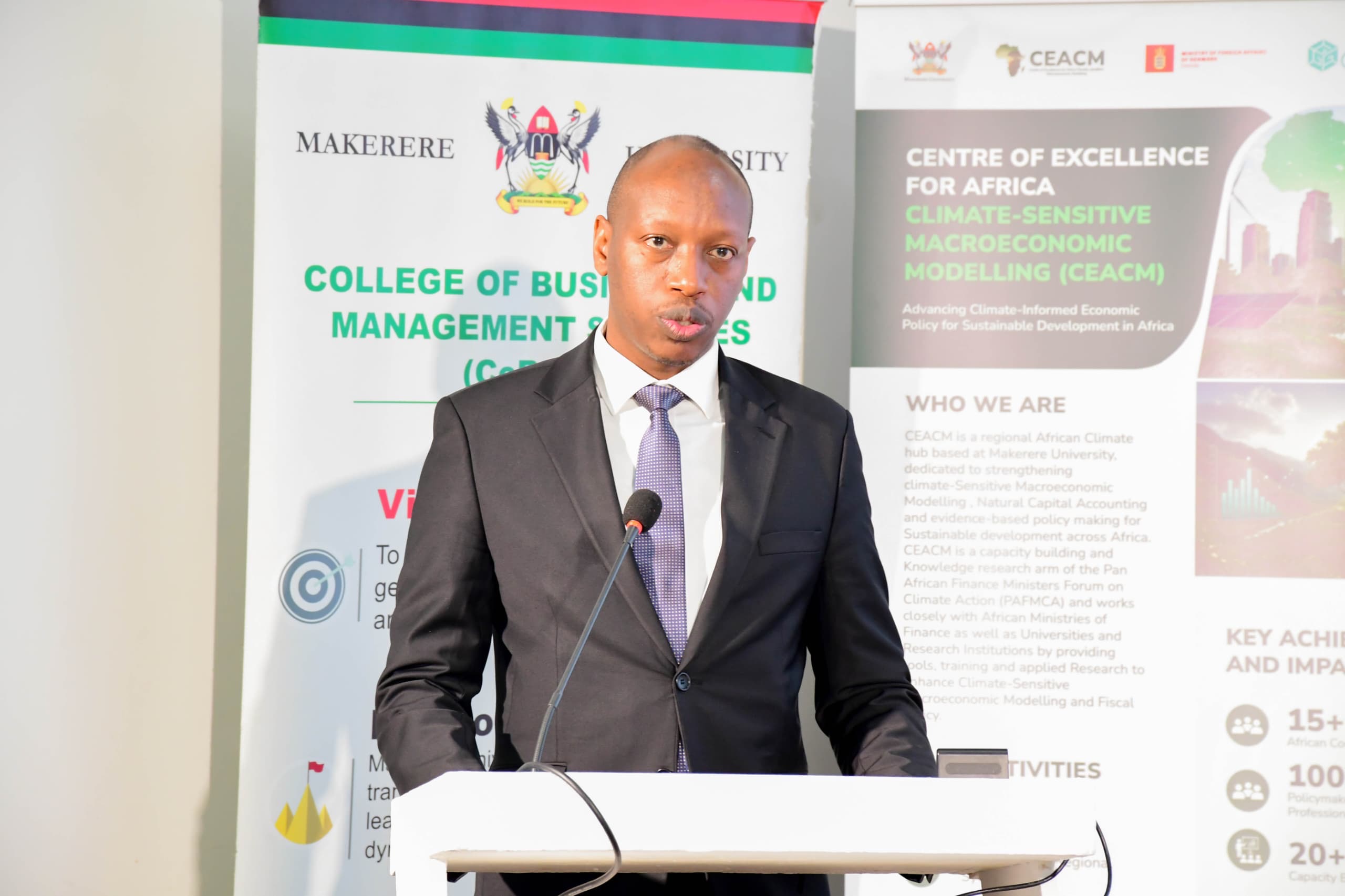
Davis Vuningoma, Acting Commissioner for Macroeconomics Policy at Uganda’s Ministry of Finance.📸 Monica Meeme.
Vuningoma said climate risks threaten agricultural productivity, energy generation, infrastructure, government revenues and fiscal stability. He welcomed the Centre’s partnership with government in building local expertise and reducing reliance on external consultants.
Vuningoma noted,the policy briefs would support evidence-based decisions to sustainably manage natural resources while advancing Uganda’s ambition of becoming a US$500 billion economy by 2040.
The launch featured a panel discussion where Panelists observed that integrating natural capital accounting into Uganda’s economic planning is essential for sustainable development and informed policymaking.
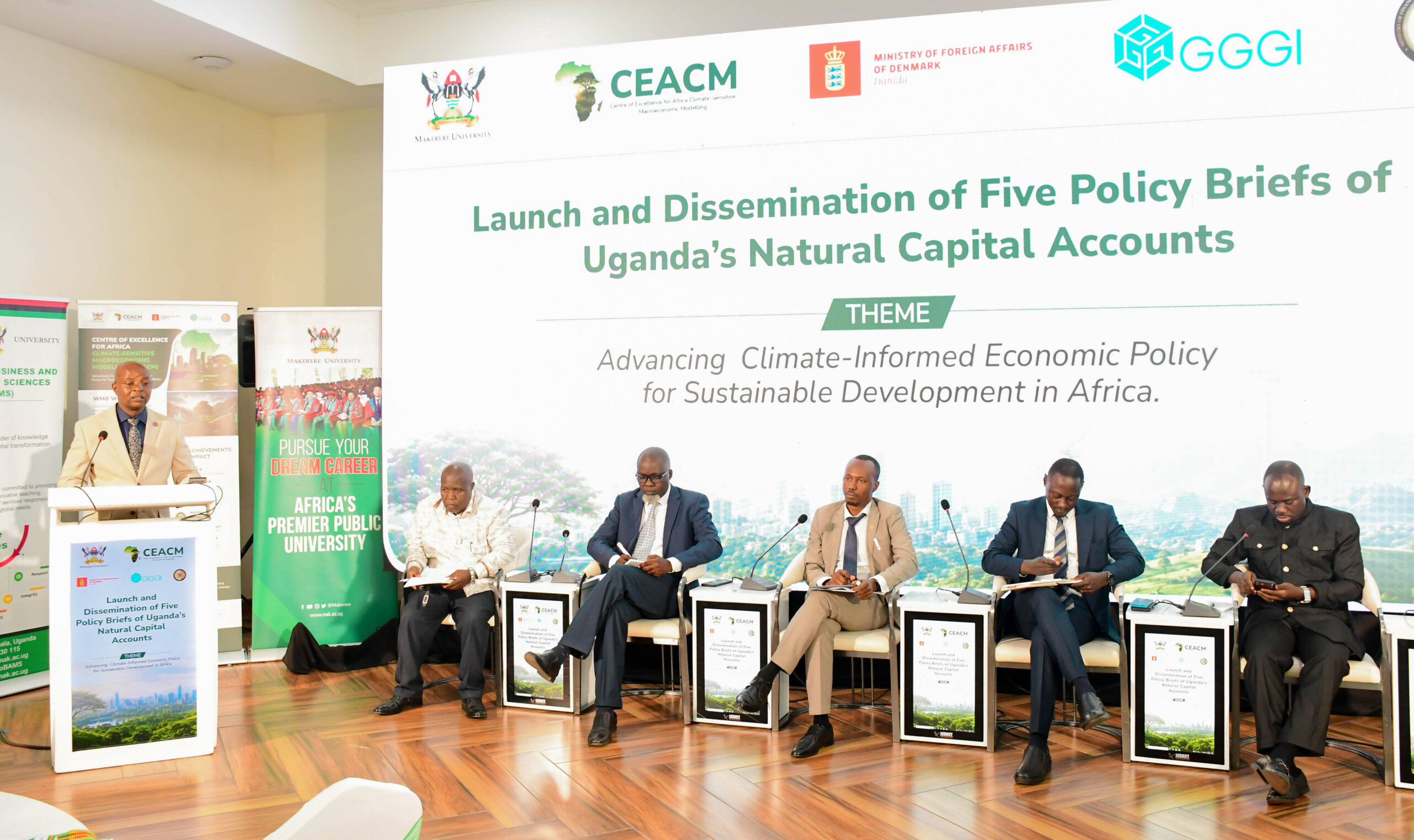
Pamel Discussion. 📸 Monica Meeme.
They argued that assigning monetary value to forests, wetlands, water resources and other ecosystems would enable evidence-based budgeting, investment decisions and environmental protection while capturing costs ignored by traditional GDP measures.
Speakers stressed the need for stronger institutions, increased funding, enhanced research and capacity building, and closer collaboration between government, academia and development partners.
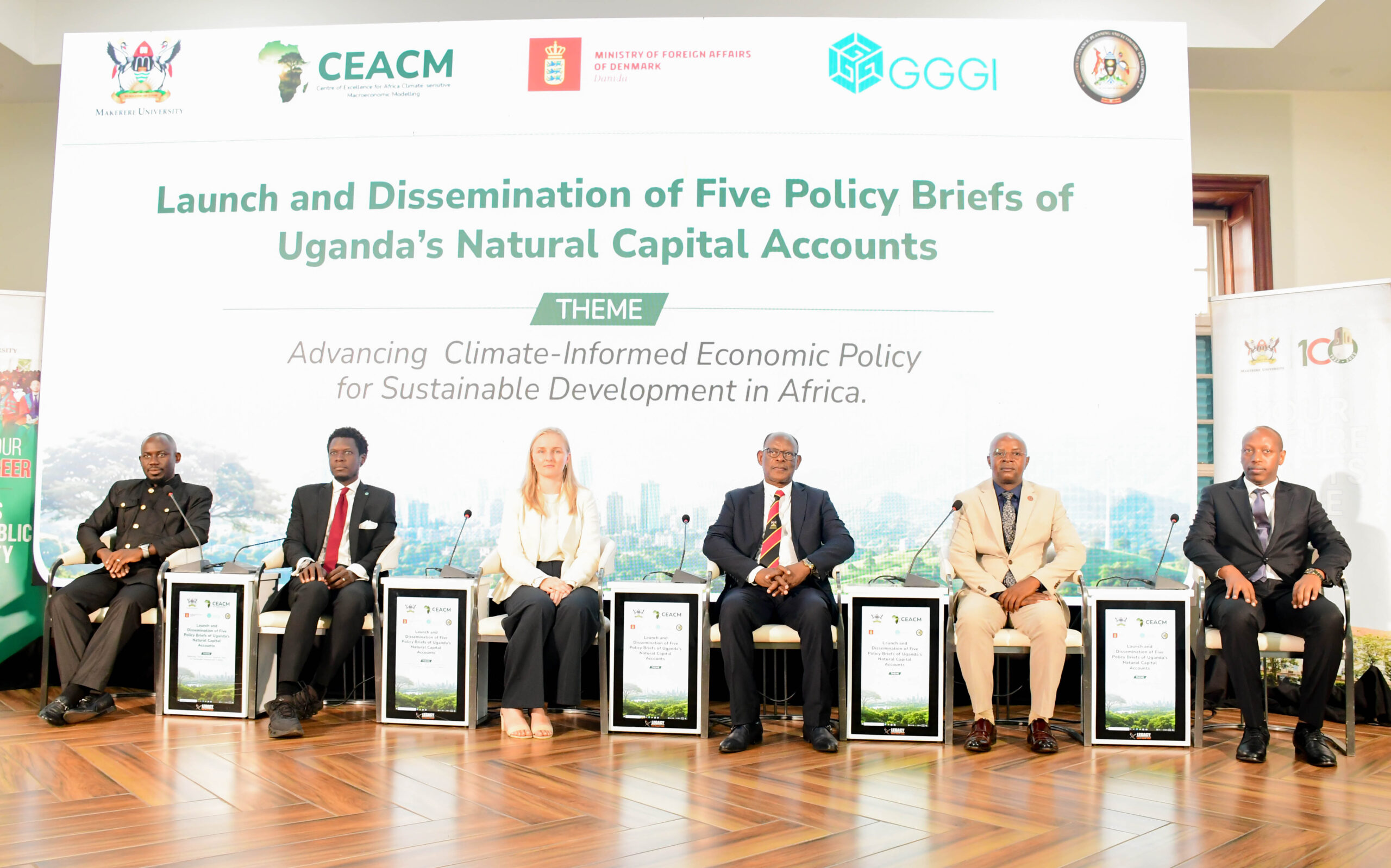
The discussion also underscored that climate change has become a growing fiscal risk, making natural capital accounting critical for managing public finances, supporting green growth and achieving Uganda’s long-term economic transformation goals.
