By Julius Mugaga Tukacungurwa, Umoja Standard.
Kampala, Uganda: Makerere University hits a milestone in specialized medical care at it proudly graduated 16 pioneering Super-Specialized Medical Trainees. These dedicated physicians have successfully completed the rigorous Paediatric Hematology and Oncology Fellowship program, becoming elite experts in treating life-threatening blood disorders and cancers in children.
This landmark achievement enhances the region’s capacity to deliver highly specialized care, promising improved survival rates and quality of life for countless young patients.
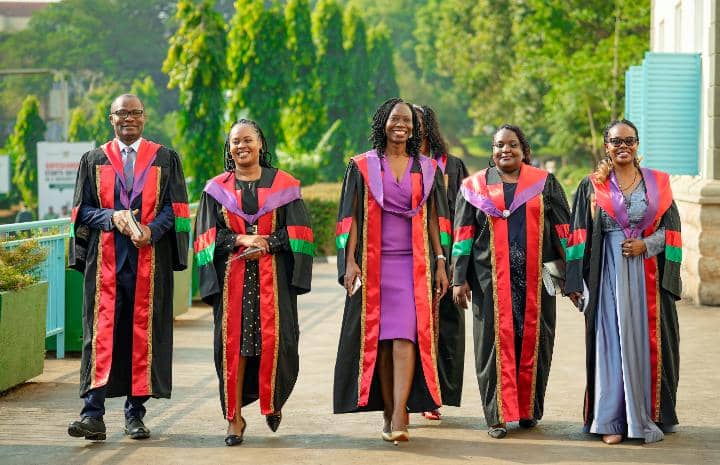
The graduation of 16 new fellows, hailing from Uganda, Kenya, South Sudan, Tanzania, Malawi, Nigeria, and Congo, marks a critical milestone. This pioneering fellowship program commenced in 2016.
Representing the Director General Health Services and Permanent Secretary of the Ministry of Health, Dr. Richard Mugahi highlighted the vital role of the new specialists in transforming Uganda’s healthcare landscape. Dr. Mugahi emphasized the graduation as not only fellows dedication, but also an important step forward for Uganda’s healthcare system citing the critical need for their expertise.
He detailed the alarming burden of childhood cancer in Uganda, with 1,500 to 3,000 new cases reported annually, yet only 30% access specialized treatment, resulting in tragically low survival rates of 20-30% beyond three years. In response, the Ministry of Health is strengthening its partnership with Makerere University, recognizing that “the role of research, the role of academia is well highlighted and emphasized,” and crucial for producing skilled professionals.
Dr. Mugahi announced the government’s strategic plans to absorb these new specialists, actively developing human resource structures and mobilizing resources to utilize their skills nationwide. He also revealed ongoing efforts to decentralize cancer care through regional centres, citing the operational facility in Gulu and planned sites in Arua, Mbarara, and Mbale, all of which will strongly need fellows’ expertise to address our population. He concluded by reiterating the core mission: “Our mission is clear. We now have the inputs, you’re one of the inputs of providing Uganda with the best possible quality of care.” He stated.
In his address, Professor Barnabas Nawangwe, Vice Chancellor Makerere University emphasized the university’s guiding vision, noting that it remains committed to producing highly skilled professionals who address Uganda’s and Africa’s evolving health challenges while acknowledging the strenuous hard work of fellows during training and the vital sacrifice.
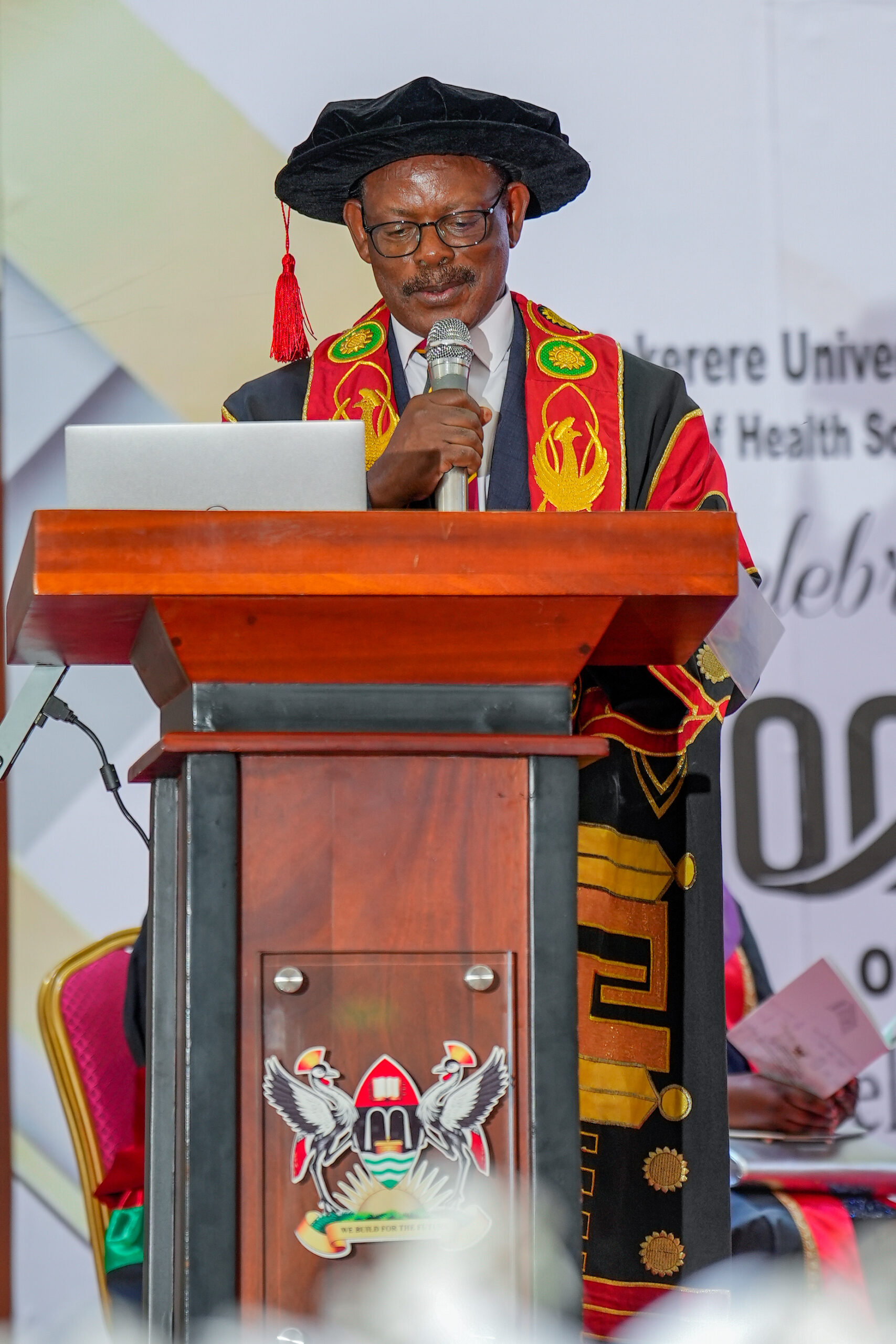
Prof. Nawangwe recounted on University’s significant historical contributions to public health and medical research recalling the College of Health Sciences’ past achievements, including its 1964 recognition for lymphoma research hence being nominated for a Nobel Prize for the discovery of the cells that cause the cancer of the lymphoma. He cited the university’s crucial role in managing the Ebola outbreak in West Africa, asserting, it has made an enormous contribution there additing to its instrumental efforts in combating Nodding Disease and the recent COVID-19 pandemic.
He starkly outlined Uganda’s demographic realities and the resultant increase in health challenges with exponential growing young population alongside the alarming statistics of childhood cancer and sickle cell disease. With an estimated “7,000 children and adolescents evoke cancer with less than 50% access in treatment,” and over “20,000 babies are born with sickle cell every year,” the need for specialized care is critical. Professor Nawangwe stressed the urgency of the situation, affirming, “It is reported that many of the deaths from cancer and blood disorders are preventable,” and firmly stated, “We must produce enough doctors to manage the disease burden we have.”
Makerere University established its pioneering fellowship program in 2016. In this endeavor, Prof. Nawangwe recognizes the instrumental role of partners such as Texas Children’s Global and Baylor College of Medicine, among others, in achieving this vision, praising the success of the program, which has since trained 24 pediatricians serving as leaders across six countries in Africa.
For Professor Bruce Kirenga, Principal of the College of Health Sciences started with the mention of the institution’s century of medical training excellence and its forward-looking vision as the College holds it’s third graduation ceremony of the Paediatric Haematology and Oncology Fellows.
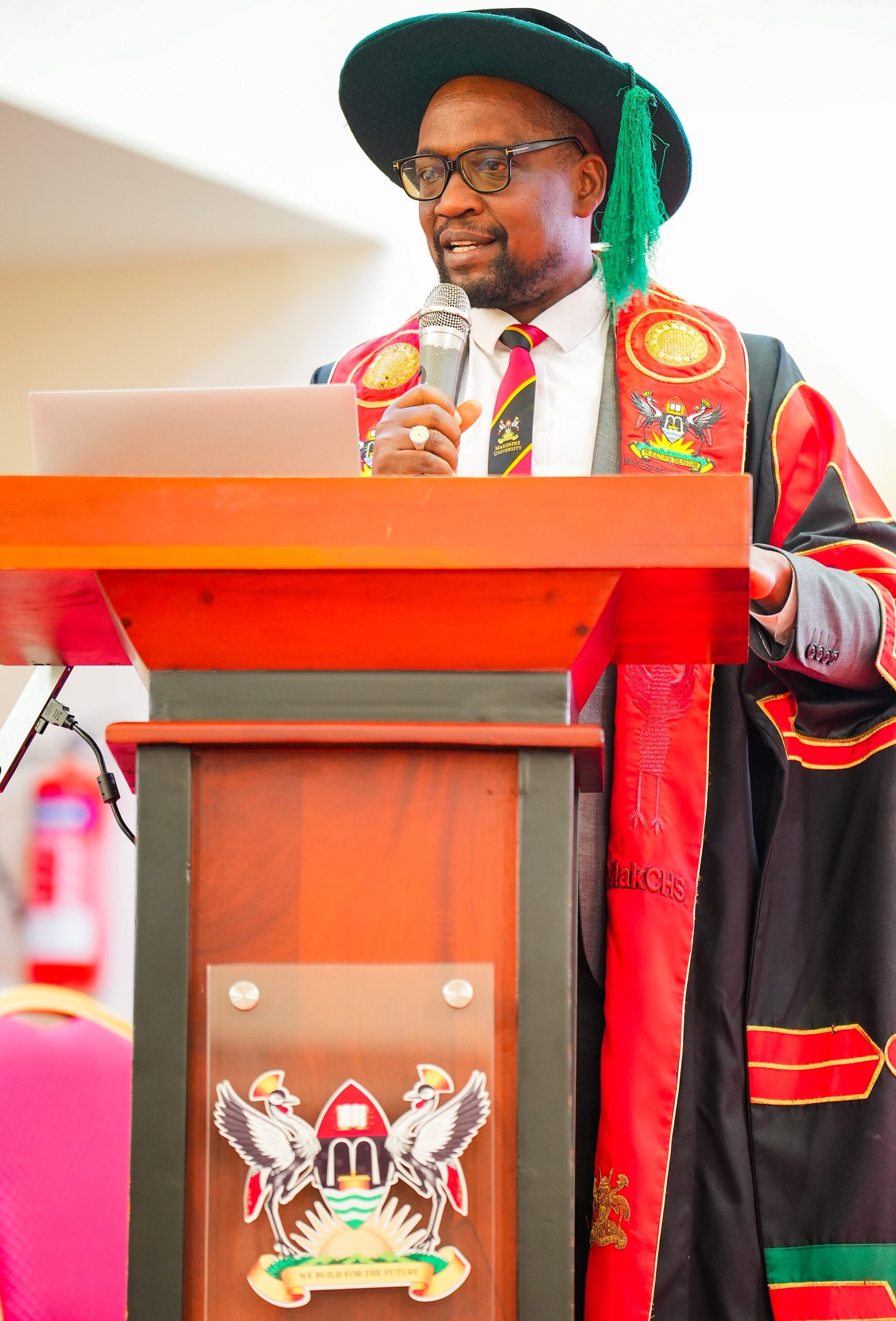
He emphasized the institution’s commitment to advancing healthcare in the region, adding that this future is geared towards more scientific research and innovation and cutting-edge medical care.
Professor Kirenga proudly announced that the fellowship program is the first of their sub-specialized training programs yet celebrating the success of the inaugural program with the graduation of 16 fellows.
He further revealed the expansion of these crucial programs, noting that the college currently offers three additional sub-specialized training pathways: Neonatology, Interventional Radiology, and Fetal and Maternal Medicine, with two more programs under review; in this regard, Professor Kirenga extended gratitude to supporting partners, affirming the college’s unwavering dedication to its mission.
On his part, Dr. Joseph Lubega, a Children’s Cancer and Blood disease Specialist and associate professor at Baylor College of Medicine, Texas Children’s Hospital, USA, recognized the significant advancements in child healthcare across Africa with specialists trained in children’s cancer and sickle cell disease.
Dr. Lubega emphasized the profound impact of this initiative on patient outcomes stating that ‘whereas when we started this work, most children with cancer anywhere in Africa would die within a month of a diagnosis, now most of them are cured.’ Despite this progress, he stressed the imperative to expand reach beyond major cities like Nairobi, Kampala, and Dar es Salaam, aiming for comprehensive coverage across all countries, especially given the much bigger challenge posed by sickle cell disease. The ultimate goal, he explained, is for these specialists to train lower health workers in their countries, ensuring every child is reached.
Challenging the conventional focus on infectious diseases in Africa, Dr. Lubega advocated for greater attention to non-communicable diseases (NCDs), saying, Sickle cell disease is one of the most common non-communicable diseases. It’s part of African DNA, 2% of newborns get these diseases.” He noted that unlike acute infections, NCDs demand lifelong follow-up and community-based care, necessitating a re-evaluation of health system training.
Encouragingly, Dr. Rosemary Kusaba Byanyima Mulago National Referral Hospital used the platform to reveal to the country how the Hospital is charting a new course towards offering highly specialized medical services, emphasizing that they can only offer that when they have people who have trained as super-specialists.
This strategic move is predicated on building a robust local human resource, specifically super-specialists, whose rigorous training pathway extends beyond a first degree and master’s to include a specialized fellowship. The traditional approach of training abroad, Dr. Byanyima noted, is very expensive. To overcome this, Mulago is actively working with collaborators to build the capacity to train locally. This innovative model involves sponsoring a select few for training abroad, who then return to establish and lead local programs, significantly enhancing the hospital’s self-sufficiency.
She stressed that Mulago is uniquely positioned as an ideal training ground due to its infrastructure, ‘ we have the equipment. And of course, there are many patients who require the service.’ She metioned, while Mulago provides the environment, it collaborates with accredited training institutions for official awards.
The benefits of local training are multifaceted; it not only builds internal capacity but also allows the hospital to continuously identify and address service delivery gaps in infrastructure, equipment, medicines, and sundries.
Dr. Byanyima affirmed. Local training is also cheaper and eases the very strenuous emotional burden on advanced-age trainees with families, who would otherwise have to relocate abroad for years. Crucially, as these experts train, they simultaneously offer services, with patients directly benefiting from their evolving skills.
Additionally, she noted, Mulago leverages collaborations to acquire essential resources, while simultaneously lobbying the government for sustained funding to ensure the long-term continuity and self-procurement of these vital items.
Addressing the escalating challenge of non-communicable diseases (NCDs) like cancer and diabetes, Dr. Byanyima acknowledged the continuously increasing number of patients, necessitating a proportional increase in human resource infrastructure, medicines and surgeries to be able to meet the demand.
She also stated Mulago’s role in health education at the tertiary level, empowering patients to disseminate crucial health information within their families and communities, complementing primary healthcare prevention efforts by the Ministry.
In her remarks, Dr. Ankunda Siyadora, a newly graduated fellow of the Paediatric Hematology and Oncology Fellowship cohort 2018/2020 from Makerere University College of Health Sciences noted that this will revolutionize the landscape of childhood cancer and blood disorder care in Western Uganda. Currently working with Mbarara Regional Referral Hospital, Dr. Siyadora’s passion for pediatric hematology and oncology was ignited during her internship at St. Mary’s Hospital in Gulu. Witnessing numerous children suffering from advanced Burkitt Lymphoma, often receiving only palliative comfort, deeply affected her. “That made me a bit sad, but also built the passion I have for pediatric hematology,” she recounted.
Motivated by the stark contrast between the mere 80% survival rates in Western countries and the grim reality she encountered, her core desire is to change the narrative that every child with cancer or blood disorder should die or be in pain. Her fellowship, she believes, will lessen the burden by ensuring every child who has a cancer or a blood disorder, gets an early diagnosis and then get the right treatment for their disease.
A cornerstone of Dr. Siyadora’s strategy involves empowering the community through education on crucial red flags. For sickle cell disease, parents are urged to seek screening for children exhibiting unexplained pain and swelling of hands or feet, unusual paleness, or yellow eyes. Similarly, for potential cancer, symptoms like an unexplained swelling or mass, or a child becoming easily fatigued and pale, warrant immediate medical attention. This proactive approach aims to facilitate early detection, which is vital for improving outcomes before diseases reach advanced stages.
She further noted her participation in clinical trials focusing on leukemia diagnosis through modified flow cytometry rather than traditional microscopic morphology. This method has dramatically improved accuracy and turnaround times. “We are more sure of the diagnosis because, for example, previously, what was reported as Burkitt lymphoma based on the more remote smear assessment, some of them turned out to be other cancers when they did find a diagnostic,” she explained. This precision ensures that “we are sure of the diagnosis, and then we can treat them well and then the outcomes are good.”
Addressing the common misconception that childhood cancers stem from environmental or lifestyle factors, she clarified that “in children, it’s more about the genetics, it’s just a mistake, something went wrong in the genetics, it’s nothing to do with the family or the environment, majority, close to 99% of childhood cancers, It is just a spontaneous mutation.” While a small percentage (1-3%) can be inherited, like retinoblastoma, most cases are simply “bad luck, nothing to do with the environment, nothing to do with your parents.” This understanding is crucial for families, alleviating guilt and redirecting focus to early intervention.
These experts will be pivotal in improving care for children with blood disorders and cancers, addressing the country’s high childhood cancer burden and with the Ministry of Health planning will integrate these specialists into the healthcare system and establish regional cancer centers, it will increase access to specialized care, improve treatment outcomes, and enhance the quality of life for children with cancer and blood disorders in Uganda.
