By Mary Primrose Nabankema
Kampala, Uganda – July 14, 2025.
The Makerere University School of Public Health became a regional hub for transformative dialogue as it hosted the Annual learning forum for the Partnerships for stronger Knowledge Systems in Africa (KNOSA) from July 8-10, 2025. The three day convening brought together country teams from Uganda, Kenya, Ethiopia and Somalia each comprising of researchers and influential policy makers whose patternships are formed to increase country capacities to develop and strengthen institutional mechanisms, cultures, incentive structures and trusted relationships to better enable the generation and use of locally relevant evidence in policy making processes seeking to advance understandings of how research evidence is used, shaping policy maker behaviours and strengthen institutional structures.
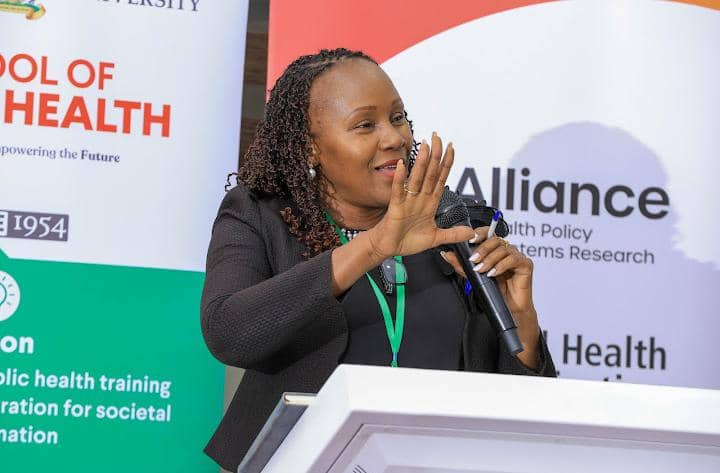
KNOSA, launched in September 2024 by the Alliance for Health Policy and Systems Research under the World Health Organisation was born out of a growing recognition that many Low and Middle Income Countries (LMIC’s) struggle to translate research into policy. The initiative emerged from an inception workshop in Addis Ababa where country teams co- created a theory of change and laid the foundation for a bold shift from isolated academic efforts to institutionalized system level approaches that foster sustainable knowledge eco systems.
At Makerere, the forum served as the midterm checkpoint for country partnership to reflect and recommit. The event hosted in collaboration with the World Health Organisation and Alliance for Health Policy and Systems Research provided a vibrant space for country delegations to showcase their progress, dissect policy challenges and refine strategies to embed research into governance frameworks and also engage in spirited exchanges on how to strengthen the use of locally generated evidence in governance.
Dr. Kumanan Rasanathan, Executive Director of the WHO Alliance for Health Policy and Systems Research in his welcoming remarks speech he praised Makerere University’s leadership in bridging research and policy.
He highlighted the urgency of building adaptive systems that can respond to crises with efficiency and equity and for him KNOSA represents a turning point where evidence becomes a tool for transformation rather than just documentation.
He furthermore urged participants to move away from siloed approaches and embrace coherent system wide-thinking and emphasized the Alliance’s 25 year partnership with Makerere and affirmed World Health Organisation’s (WHO) commitment to supporting regional initiatives to driving this shift across Africa.
Day two of the forum saw an uplifting moment as Makerere University’s Vice Chancellor, Professor Barnabas Nawangwe joined participants to welcome delegates from their respective countries with a call to action emphasizing that universities in low income countries are expected to play a leading role in research and Makerere plays a major role in influencing policy by working closely and patterning with other organisations.
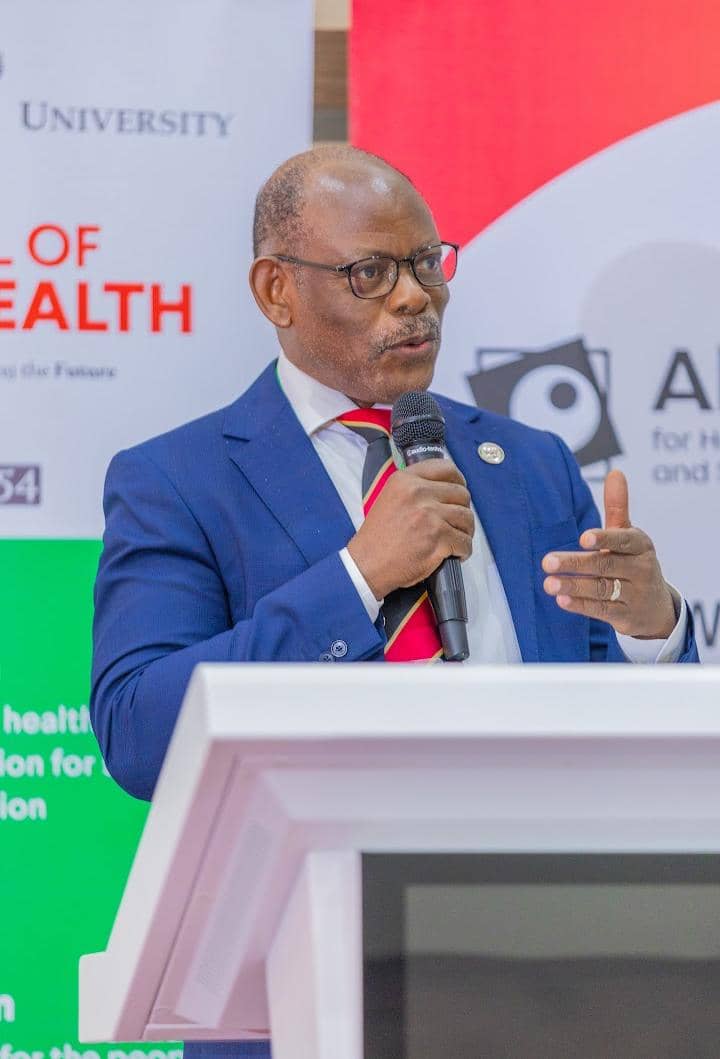
Professor Barnabas Nawangwe, Vice Chancellor, Makerere University.
He emphasized deeper collaboration across boarders stating that universities must move beyond publishing papers to shaping real world decisions. He elaborated that Makerere University contributes over 80% of Uganda’s academic output and pointed out that it’s deep engagement with policy influencing responses under the MakSPH and College of Health Sciences (MakCHS) have led to innovations that have shaped responses like for example to HIV/AIDs, COVID-19 and Ebola.
Followed was Professor Rhoda Wanyenze, Dean Makerere University School of Public Health who underscored the school’s commitment to translating evidence into action. She pointed out that over 80% of her staff serves on technical committees a testament of MakSPH’S commitment to producing grounded research that informs real world solutions calling for a framework that track how research leads to impact and urging colleagues to move beyond academic prestige to measurable societal benefits. Her vision for MakSPH is one the grounded scholarships where research is not just published but practiced for societal transformation and development.
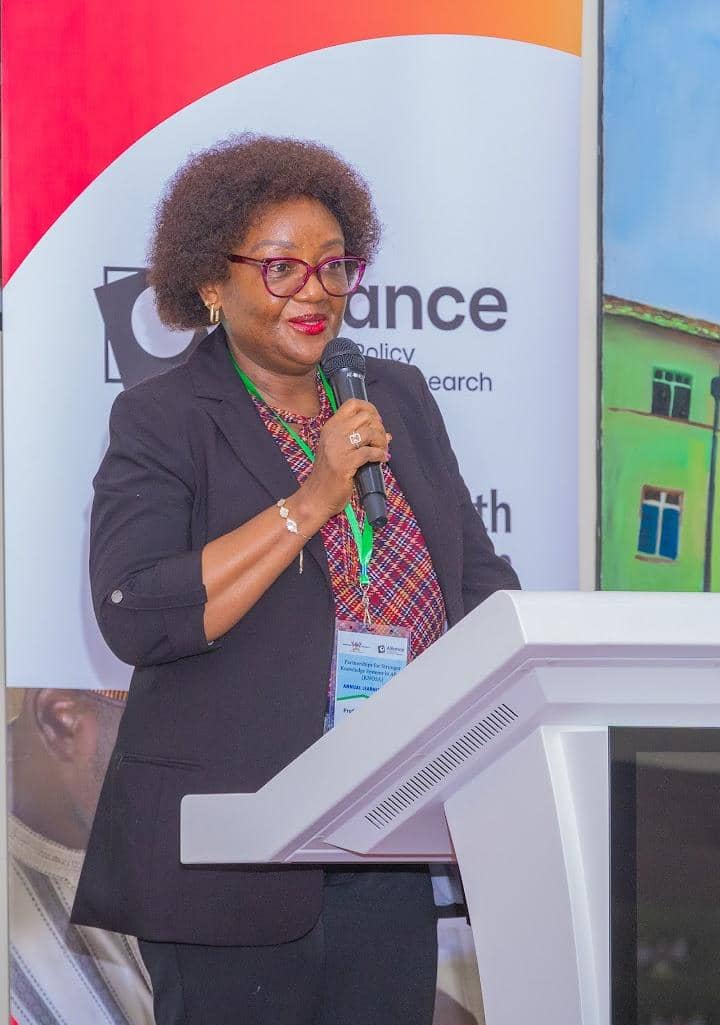
Professor Rhoda Wanyenze, Dean MakSPH.
Country representatives kicked off with impactful updates from representatives spotlighting how each nation is navigating the terrain between evidence generation and policy making where Somalia focused on cultivating trusted relationships between institutions. Kenya shared its approach to building brokering mechanisms while Ethiopia emphasized scaling effective institutional processes and Uganda highlighted its unique experience by integrating government funding such as Makerere University Research and Innovations Fund to enhance local research and policy dialogues.
Throughout the sessions, key speakers reinforced that the path to better governance lies in recognizing evidence as an everyday tool rather than a distant ideal. Discussions ranged from rethinking how evidence is framed in national contexts to pinpointing organisational habits to delay impact. Among the speakers was Dr. Aku Kwamie working with the WHO Alliance who stressed that partners need to shift their thinking towards policy making and suggested shifts that are essential for embedding evidence into routine governance which included embedding knowledge within institutions, linking research directly to decision making and advancing from academic work to system-level thinking.
The forum also featured panel discussions where government officials, civil society leaders and media experts shared their perspectives. Discussions explored how countries coordinate evidence into planning, how civil society advocates for budget transparency and how journalists shape public narratives around policy debates. These exchanges highlighted the importance of multi-sectoral collaboration in building resilient knowledge systems.
Throughout the forum one of the most dynamic sessions involved country teams working together to refine their impact pathways. They examined which activities were being sustained, which were not and why. They explored how evidence is currently framed in their contexts and how that framing could be improved within their teams.
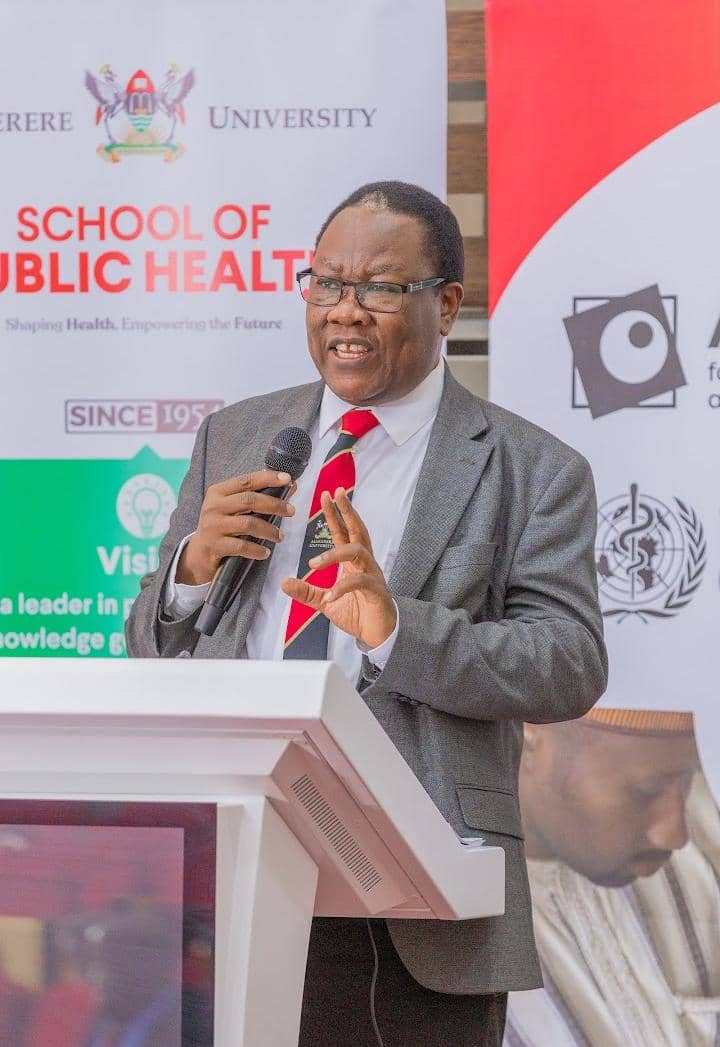
Professor Freddie Ssengoba.
Professor Freddie Ssengoba, a leading voice in Health Policy Systems at MakSPH emphasized that while epidemiology often takes centre stage, it is system behind the scenes how knowledge is harvested and applied that determines success. He went ahead and credited KNOSA for elevating the relevance of institutional research and called for greater ownership of health systems by African nations.
The closing session reflected a spirit of collective growth whereby Forum organisers expressed confidence that the event has seeded stronger networks and inspired renewed commitment to elevating research into decision making and as participants departed to for site visits around Makerere University a thing was clear that KNOSA is more than a project but also a movement towards shaping how knowledge systems can shape public policy across Africa.
