By Monica Meeme
In a significant step towards enhancing the Competence-Based Curriculum (CBC) in science subjects, Makerere University, Department of Science, Technology, and Vocational Education (DSTVE) under College of Education and External Studies (CEES) at Makerere University conducted a workshop on 18th July 2025 themed: “The Role of School Administration in Implementing and Assessing the Competence-Based Curriculum for ‘O’ and ‘A’ Levels of Secondary Schools,” aimed at equipping school administrators with the tools and knowledge necessary to support the CBC in science education.
The workshop covered critical topics such as: Implementation of CBC: Discussing the expectations for STEM teachers, activity-based learning, the role of school administrators, and strategies for monitoring CBC, Assessment of CBC: Focusing on the UNEB grading system, assessment of activities and integration, and how administrators can ensure effective assessment, Secondary School Teacher Experiences in CBC: Addressing the challenges faced by administrators in implementing and assessing CBC in science education, along with coping strategies.
The workshop brought together teachers and school administrators from different education institutes in Uganda including: Dr. Edward Kansiime, a lecturer from Department of Science, Technology, and Vocational Education (DSTVE) Dr. Marjorie Sarah Kabuye Batiibwe, Head of Department of Science, Technology, and Vocational Education (DSTVE), Assoc. Prof. Mathias Bwanika Mulumba, Dean of the School of Education (SoE), Prof. Anthony Muwagga Mugagga, Principal of CEES, and Mr. Wilson Ssabavuma from the National Curriculum Development Centre (NCDC), among others.
In her opening remarks, Dr. Marjorie Sarah Kabuya Batiibwe, the head, Department of Science, Technology, and Vocational Education (DSTVE) under the College of Education and External Studies (CEES) at Makerere University emphasized that the Competence-Based Curriculum (CBC) workshop is important in equipping school administrators with the necessary tools, knowledge, and strategies to effectively implement and assess the Competence-Based Curriculum (CBC) in science education.
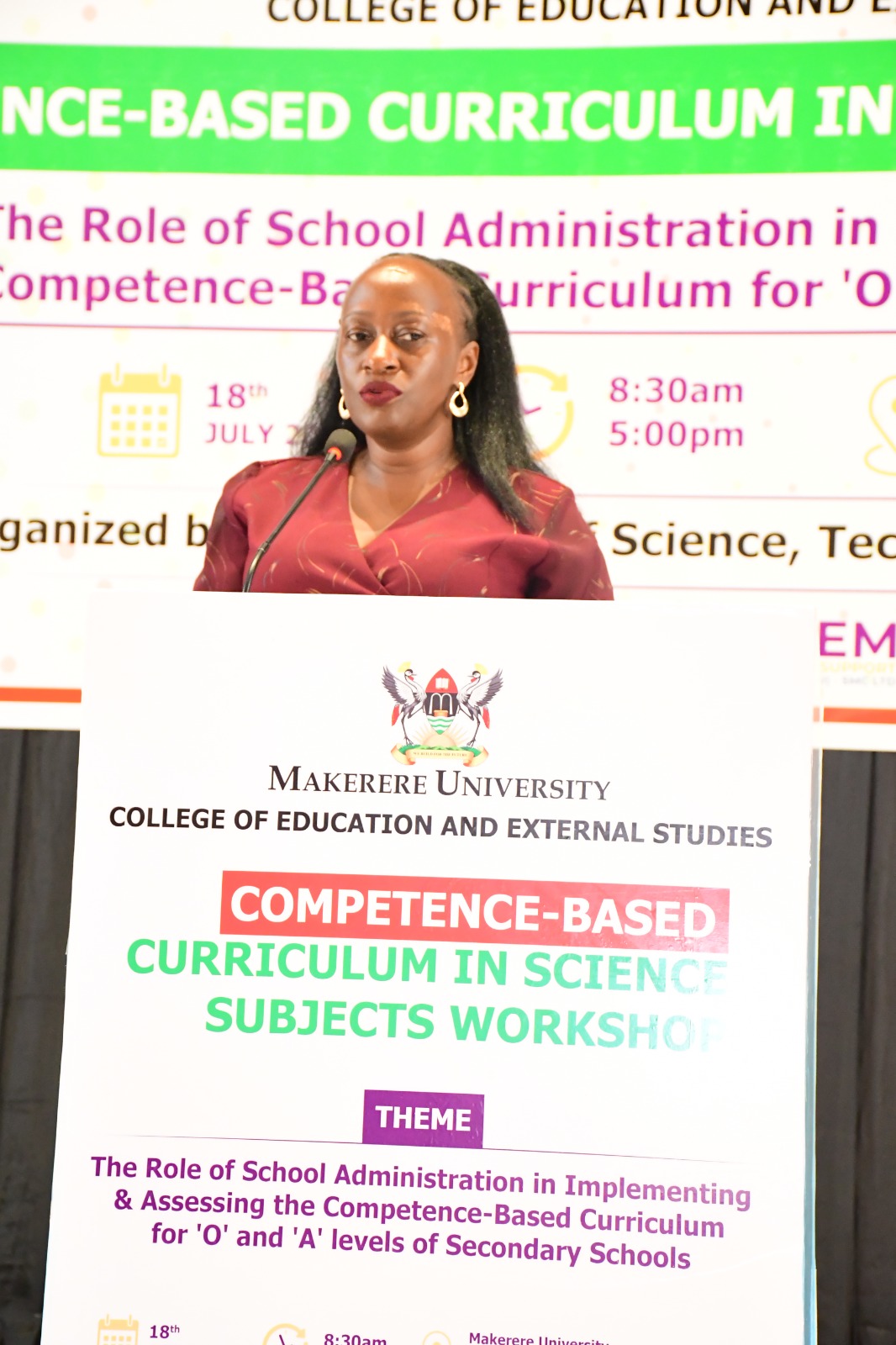
Dr. Marjorie S. K. Batiibwe, The head, Department of Science, Technology, & Vocational Education delivers s her remarks.
“Our mission is to ensure teachers are not only knowledgeable but also skilled in inspiring and leading students,” she said, highlighting the dual role of educators in teaching and mentoring the next generation.
She highlighted that Makerere University is committed to supporting teachers and administrators through regular workshops and training sessions.
Additionally, she noted that the CBC offers students with opportunities to participate in STEM fairs through debates, providing them with a platform to explore and showcase their scientific interests.
Underscoring the role of CBC in addressing gender roles, Dr. Batiibwe stressed the need for inclusivity in Science, Technology, and Vocational Education (STEM), urging teachers and administrators to inspire female students to pursue careers in these fields.
In his address, Associate. Prof. Mathias Bwanika Mulumba, the Dean of the School of Education (SoE) under College of Education and External Studies (CEES) at Makerere University, stressed the need for practical education to build skills, knowledge, and competencies tailored to learners’ needs and societal contexts.
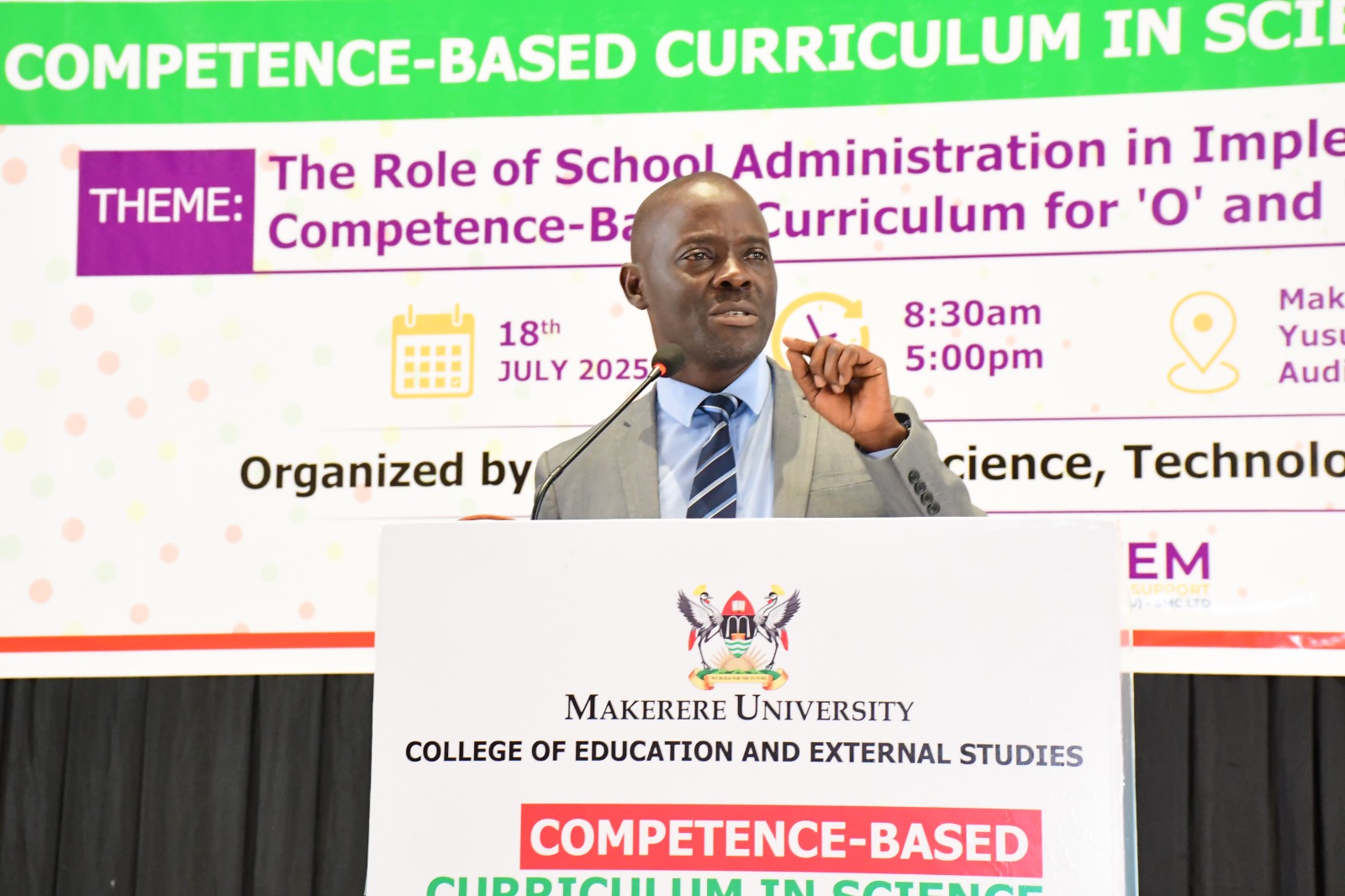
Associate Professor Mathias Bwanika Mulumba, Dean of the School of Education.
“Science must be taught not only theoretically but, also practically,” he said, sharing examples from China where people handle everyday tasks like home repairs independently.
He emphasized that teaching should empower students to solve real-world problems.Associate Prof. Mulumba also commended the National Curriculum Development Centre (NCDC) for its efforts in enhancing the teaching framework and urged school administrators to ensure that teachers receive continuous professional development (CPD) and have opportunities for knowledge sharing.
He advised teachers to use local languages while explaining scientific concepts before translating to English or other foreign languages, to improve comprehension.
He emphasized the importance of effective curriculum implementation to help Uganda reach its goal of becoming a middle-income nation by 2040, particularly in the fields of science and mathematics.
He further stated, ‘To achieve this goal, it is crucial to establish a structured Continuous Professional Development (CPD) system that fosters ongoing training and peer-to-peer learning within schools.’
Opening the workshop, the Principal, College of Education and External Studies (CEES) at Makerere University, Prof. Anthony Muwagga Mugagga, encouraged administrators and teachers to embrace a mindset shift to overcome challenges and achieve success in education.
Professor Anthony M. Mugagga opening the workshop, The Principal, College of Education and External Studies (CEES) speaks to the congregation.
He further added that growth and success are driven by adaptability and openness to change, urging participants to collaborate and learn from each other to implement the CBC successfully.
In his presentation, Mr. Wilson Ssabavuma from National Curriculum Development Center (NCDC) highlighted the critical role of Competence-Based Curriculum (CBC) in societal and personal transformation.
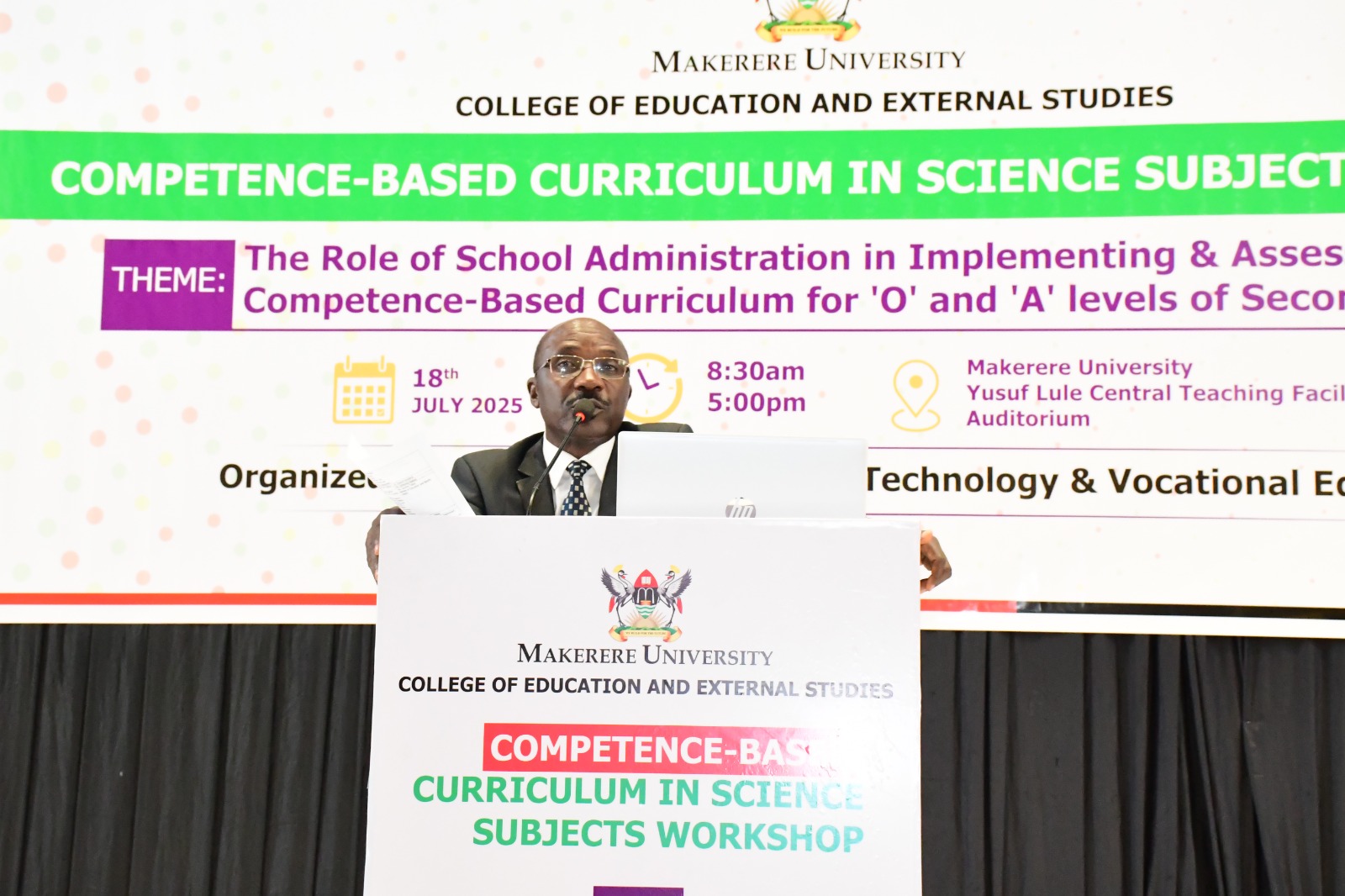
Mr. Wilson Ssabavuma, from National Curriculum Development Center (NCDC).
He described education as a process that transmits knowledge, skills, values, and cultures, forming the foundation for national development. He further called for continuous alignment of education with societal needs and global demands.
Aligning with the theme, Mr. Ssabavuma recommended that administrators implement four exams throughout secondary education to track students’ progression and competence.
He stressed the importance of adapting the education system to be responsive to societal changes and the future of Uganda’s education depends on effective CBC implementation.
He emphasized that the implementation of the new curriculum would be gradual, but ultimately rewarding, as long as administrators consistently update instructional materials and focus on promoting deeper student understanding rather than just preparing for exams.
Mr. Moses Ronald Mudde from the Ministry of Education and Sports (MoE) acknowledged the role of Competence-Based Curriculum (CBC) in nurturing well-rounded individuals skilled in critical thinking, problem-solving, and communication.
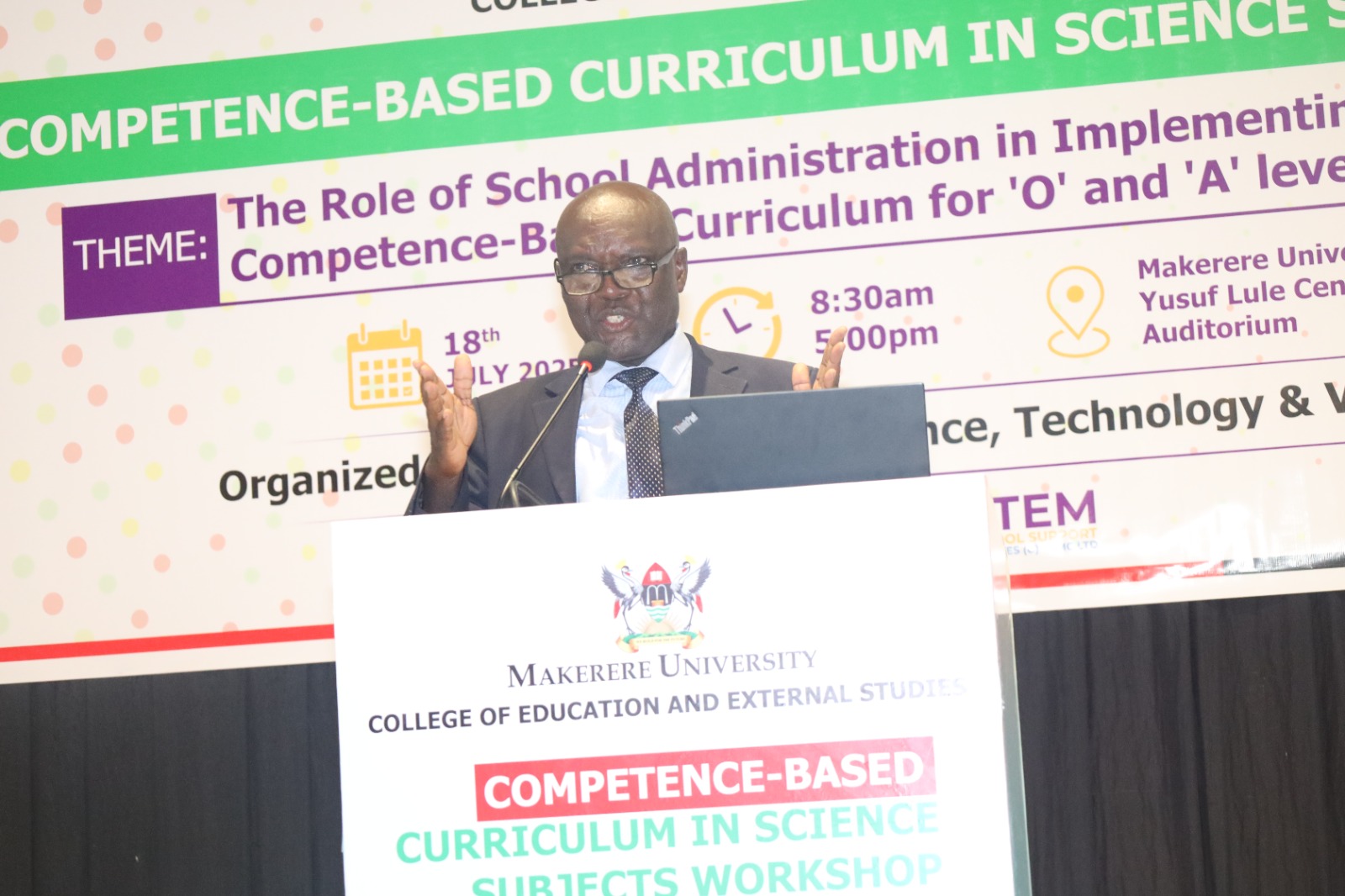
Mr. Moses Ronald Mudde, from the Ministry of Education and Sports (MoE).
He called on administrators to equip teachers with practical materials to promote activity-based learning and urged teachers to be innovative in their instructional methods.
In her closing remarks, Dr. Batiibwe stressed the need for continuous communication between schools, policymakers, and higher education institutions to facilitate ongoing dialogue.
She reiterated that this workshop was just the beginning, with future engagements focused on working closely with stakeholders, including teachers, to ensure CBC is implemented effectively.
The workshop at Makerere University played a pivotal role in advancing the Competence-Based Curriculum (CBC) in science education, aligning with Uganda’s broader vision of becoming a middle-income nation by 2040.
