By Julius Mugaga Tukacungurwa, Umoja Standard.
Kampala: Uganda is shifting its approach to sickle cell disease (SCD) from emergency treatment to lifelong, integrated care, with health experts calling for stronger collaboration across sectors to improve survival and quality of life for people living with the condition.
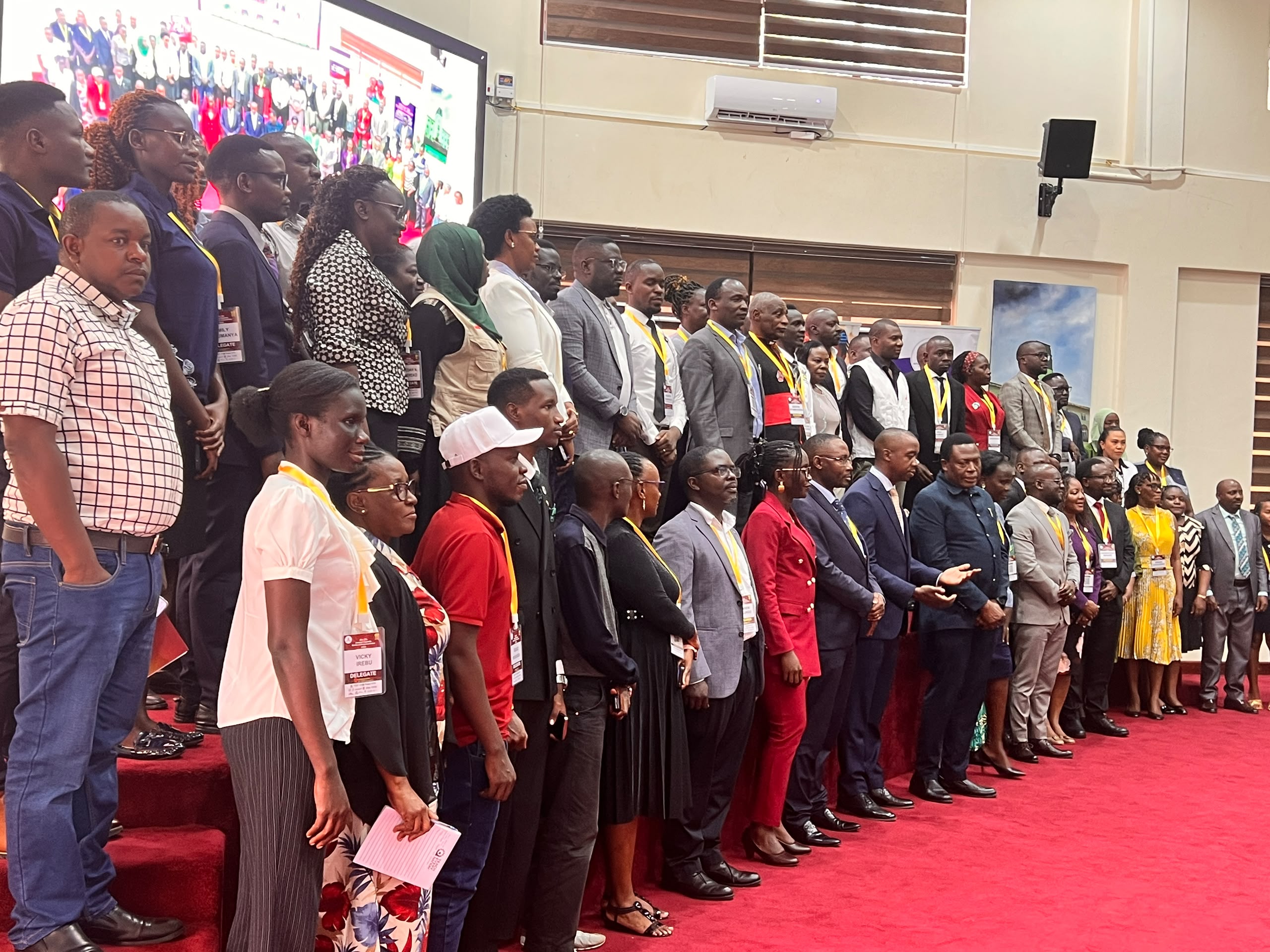
Speaking at the 5th Annual Uganda Sickle Cell Convention 2026 organized by Raising Hope International Friends and partners, Prof. Sarah Kiguli, Chairperson of the National Sickle Cell Task Force, said medical interventions alone cannot adequately address the complex social, economic, and psychological challenges faced by individuals with sickle cell disease.
Delivering a paper on “Building Sustainable Social Support Systems in Uganda and Beyond: A Multisectoral Approach,” Prof. Kiguli urged policymakers and stakeholders to move beyond focusing solely on mortality and instead prioritize comprehensive, lifelong care.
She noted that Uganda’s sickle cell registry reflects improved survival among patients, with the largest proportion aged between six and 12 years. Significant numbers are now living beyond adolescence and adulthood, including patients over 45 years, with one convention participant aged 65.
“Sickle cell disease is no longer just about keeping children alive,” she said. “It is about ensuring that people live healthy, productive, and dignified lives throughout adulthood.”
Prof. Kiguli reiterated that sickle cell disease is an autosomal recessive genetic disorder inherited when a child receives the abnormal gene from both parents. She explained that where both parents are carriers of the sickle cell trait, each pregnancy carries a 25 percent chance of producing a child with sickle cell disease, a 50 percent chance of producing a carrier, and a 25 percent chance of producing a child without the sickle cell gene.
Using the story of a child she called “Amina,” Prof. Kiguli illustrated how health outcomes depend not only on timely diagnosis and treatment but also on coordinated support from families, schools, communities, and social institutions.
“How many systems must work together to support that child? That is why we need much more than health,” she said.
She noted that beyond recurrent illness, people living with sickle cell disease often face psychosocial challenges, interrupted education, employment discrimination, stigma in schools and communities, and financial hardship for affected households, with women and girls frequently experiencing additional vulnerabilities.
Prof. Kiguli defined a sustainable support system as an integrated network of policies, services, partnerships, resources, and communities that continuously prevents, detects, treats, and supports people living with sickle cell disease throughout their lives.
She emphasized that such systems should be locally owned, resilient, and adaptable to changing needs rather than relying primarily on external donor support. She also called for greater integration of sickle cell services into maternal and child health, laboratory systems, and adult healthcare, drawing lessons from Uganda’s HIV response, where initially vertical programmes were eventually incorporated into the broader health system.
Prof. Kiguli outlined a seven-pillar framework to strengthen Uganda’s sickle cell response.
The first pillar focuses on leadership and governance, calling for stronger political commitment and national coordination.
The second is comprehensive healthcare, including reliable diagnostics, uninterrupted availability of hydroxyurea on the essential medicines list, and an effective referral system.
The third pillar emphasizes research and innovation to generate local evidence, develop context-specific solutions, and strengthen training for Master’s and PhD-level scientists.
The fourth calls for community and patient empowerment, ensuring that patients, families, and communities actively participate in planning and implementing interventions.
The fifth pillar prioritizes education and social support to reduce stigma, improve school attendance, and promote inclusion.
The sixth advocates sustainable financing through increased government investment, health insurance mechanisms, and partnerships with the private sector to reduce dependence on donor funding.
The final pillar highlights the importance of robust data systems, including a national sickle cell registry, to guide policy, resource allocation, and long-term planning.
Prof. Kiguli stressed that reducing the burden of sickle cell disease requires coordinated action across government ministries, academia, civil society, faith and cultural institutions, the media, and the private sector.
She said the health sector must lead policy implementation and service delivery, while the education sector should promote awareness and support learners living with sickle cell disease. The finance sector should ensure predictable domestic financing, researchers should generate evidence to inform policy, the media should strengthen public awareness, civil society should advocate for patients’ rights, cultural and religious leaders should mobilize communities, and the private sector should contribute innovation and investment.
On prevention, she advocated for nationwide newborn screening alongside expanded premarital, adolescent, and school-based screening and genetic counselling to enable informed reproductive decisions.
Prof. Kiguli highlighted Uganda’s achievements in sickle cell care, noting that the country established one of Africa’s earliest specialized sickle cell clinics, introduced penicillin and malaria prophylaxis programmes, expanded services to 11 hospital-based treatment centres, supported local production of diagnostic kits, and included hydroxyurea on the national essential medicines list.
Despite these milestones, she challenged stakeholders to ensure that progress translates into meaningful improvements in patients’ daily lives.
“Uganda is often recognized as a leader in sickle cell care,” she said. “But the real question is whether that leadership is truly being felt by patients and communities.”
Prof. Kiguli challenged every institution and individual to commit to strengthening Uganda’s response to sickle cell disease.
“No single sector can defeat sickle cell disease alone,” she said. “Each of us has a role to play.”
The convention agreed to a renewed call for stronger partnerships, increased domestic investment, community ownership, and evidence-driven policies to anchor Uganda’s next phase of sickle cell disease prevention, treatment, and lifelong care.
