By Julius Mugaga Tukacungurwa, Umoja Standard.
Makerere University: Spearheaded by Raising Hope International and its partners, Uganda hosted the Annual Sickle Cell Convention under the theme: _“Building Sustainable Sickle Cell Support Systems Through a Multisectoral Approach positioning expertise-driven collaboration as the cutting edge for reducing disease prevalence and improving outcomes for persons living with sickle cell disease.
In a message by the Katikkiro Charles Peter Mayiga read by Buganda Kingdom Health Official, made a call for culture-led health action, anchoring the fight against sickle cell disease in community trust and institutional leadership. “Culture is not about heritage. It is also a powerful vehicle for public health advocacy,” he stated, underscoring the Buganda Kingdom’s role as a mobilizer of people and purpose.
He recalled how the Kabaka’s birthday campaigns of 2017, 2018 and 2019, carried on a “Sickle Cell theme,” raised over 200 million shillings. Those funds, channeled through the Central Public Health Laboratory, procured and distributed more than 80,000 sickle cell screening kits nationwide for neonates and other populations — “a practical example of how cultural mobilization can translate to direct public health action.”
Speaking with the authority of a medical practitioner supervising health initiatives, the Katikkiro noted the lived reality behind the statistics: “It is not just a medical diagnosis, it is an economic, emotional and social burden on entire households.” He challenged persistent stigma, declaring, “Sickle cell disease is not a curse. It is not witchcraft. It is an innate genetic condition that can be understood, tested, planned for and managed.”
His called for genotype testing standard in pre-marital preparation, decentralize specialized sickle cell care to reach rural families, and invest in sustainable support including subsidized medication and psychosocial care.
“We shall continue to use our structures, from the grassroots villages up to the Kingdom headquarters, to advocate, educate and support our people,” he affirmed, pledging the Kingdom as an unwavering ally until every child with sickle cell in Uganda “does not merely survive, but thrives and achieves their full potential.”
In his remarks, Isaac Okello, Executive Director of Raising Hope International and President of Sickle Cell Alliance Uganda mentioned that, under the Ministry of Health’s newborn screening programme, Raising Hope has “procured over 6,000 testing kits to promote newborn screening” and supported installation of screening equipment at Jinja, Mbale and Tororo General Hospitals.
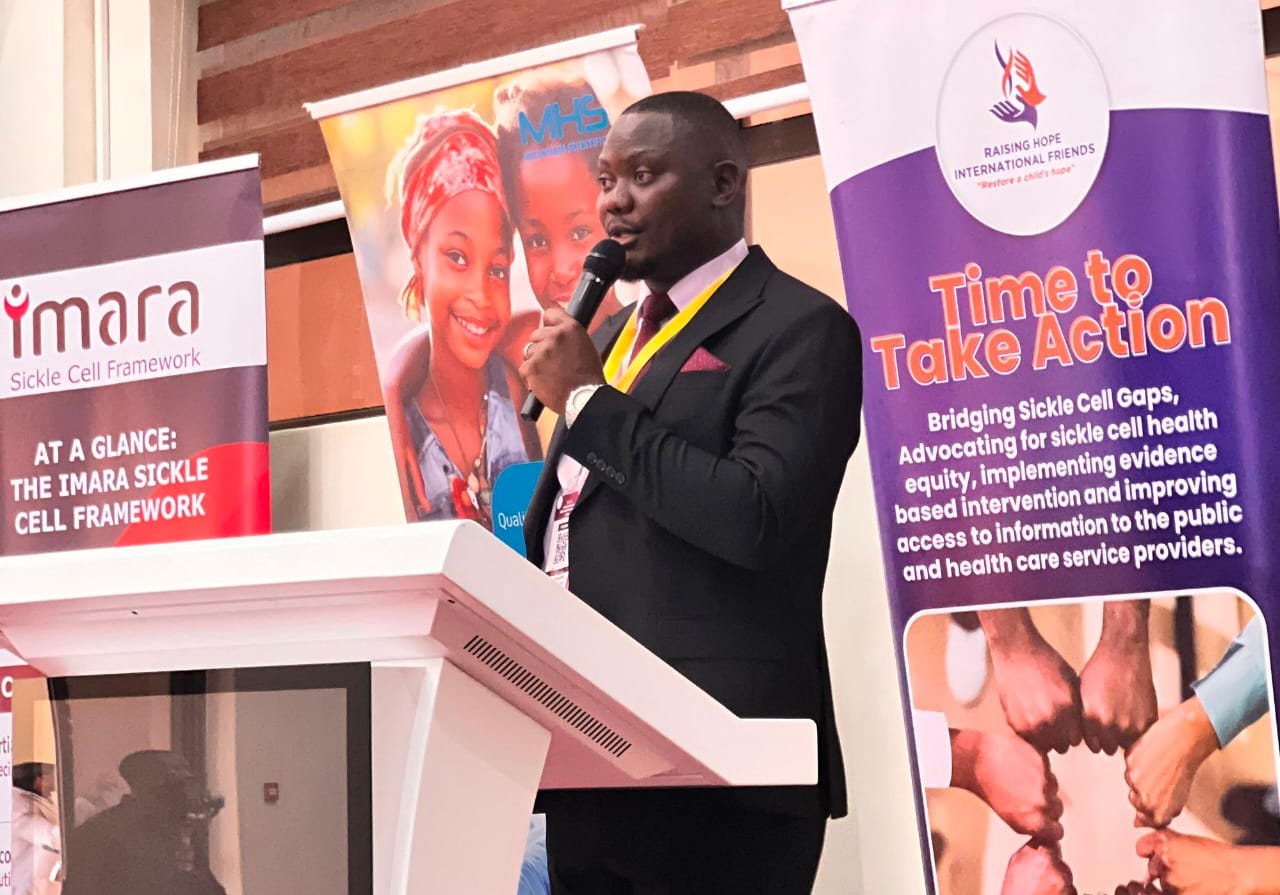
Community reach has expanded to “more than 300 villages in Eastern Region,” while human resource capacity has been strengthened through training of “over 300 health care providers from Eastern Region, to be particular in Busoga Subregion,” alongside 114 community health workers.Yet the data reveals urgency.
Okello noted that in Busoga alone, “over 300 children were identified with sickle cell disease,” with Raising Hope tasked to trace 150 children lost to care. Through follow-up, “we have supported 45 who have returned to care,” though “we have lost 10 children.”
With Uganda recording “over 25 children being born with sickle cell disease” daily and “over 80% dying before the age of five years,” he stressed that “this calls for collective efforts to ensure that we support these children, the families, and the entire sickle cell ecosystem.”
He appealed for stronger partnerships and increased investment as Sickle Cell Alliance Uganda coordinates with the Ministry to review and validate the national strategy and continental framework.
During the convention, Professor Sarah Kiguli, Chairperson of the National Sickle Cell Task Force, centered her remarks on Building sustainable social support systems in Uganda and beyond, a multisectoral approach, shifting focus from burden to lived experience.
“I want to say many of our warriors survived. We have old people who have sickle cell disease. We need to do a lot to make sure that they have quality of life,” she urged, stressing that impact is beyond health. It’s a psychosocial burden affecting education, employment, mental health, and social inclusion.
She defined a sustainable system as an integrated patient care network of policies, services, partnerships, resources, and communities that continuously prevents, detects, treats, and supports people living with sickle cell disease throughout their lives locally owned and keep on adapting to changing needs, without solely relying on external support.
Key pillars include leadership and governance with the highest office in this country to champion the cause, comprehensive health services, research and data, and community empowerment.
Prof. Kiguli emphasized integrating care within maternal health, laboratories, and adult services, training providers beyond one or two days, expanding newborn and school-age screening, and preventing stigma in schools.
“No single sector cannot beat sickle cell disease alone,” she said calling each sector to commit to a resilient framework that endures beyond projects and transforms lives.
Dr. Charles Ayume, Minister for Primary Health stressed that this is a national development issue. It touches education, household productivity, family stability, and the strength of the generation we are raising,” he stated, echoing the convention’s founding philosophy that no single ministry, no single institution, and no single sector can carry this alone.
Reporting government progress, Minister Ayume announced decisive policy steps: Parliament passed a resolution recognizing sickle cell as a major non-communicable disease requiring urgent intervention, and the Ministry has begun revising the Public Health Act to anchor sickle cell as a standalone clause and secure “a dedicated national budget line for sickle cell disease, rather than leaving its funding to compete unnamed within the wider NCD basket.”
He highlighted tangible gains including regional referral hospitals now managing the disease, gazetting 19 June as National Sickle Cell Disease Day with screening campaigns reaching over 14,000 people across nine districts, and local manufacturing of hydroxyurea and rapid diagnostic kits by Quality Chemicals and Micro-Heme Scientific — milestones he called a big, long tick because it speaks to sustainability.
Committing Uganda to screen 80% of our newborns by 2028 under the African CDC continental plan, he appealed to cultural institutions: “Just as our cultural leaders once championed premarital HIV testing, until it became the norm, I ask that you lend the same authority to premarital genotype testing.”
Professor Charles Olaro, Director Health Services at the Ministry of Health, used the platform to draw lessons from Uganda’s HIV response, he emphasized, “we need to borrow lessons from what we put in to combat HIV in this country to see that how do we do that,” while clarifying that HIV efforts would not be deprioritized.
He called for defining “what is our sickle cell cascade,” mirroring HIV’s 95-95-95 model, so that “we are able to track and monitor, then we can be able to see that whether we are moving in the right way.”
Tracking retention is critical, he noted, because you heard about the children who are lost, fall out we also need to be able to look at who are the people who are lost, fall out. Olaro highlighted both progress and gaps: over 5-10 years, we have been able to test over 500,000 infants, yet with about 20,000 to 25,000 born each year, a backlog remains.
He stressed the need to roll out newborn screening to Health Centre III level, where over 50% of the patient care takes place, and to implement treatment guidelines with hydroxyurea now in the essential medicines list.
Urging consolidation of efforts, he added, if we work in a coordinated manner, then we succeed, and called for a costed strategic plan to guide cabinet resource allocation. For too long sickle cell disease was carried quietly,” he concluded, pledging Ministry leadership to change that.
For Dr. Susan Nabadda, Commissioner for National Health Laboratory and Diagnostic Services, reaffirmed the Ministry of Health’s commitment to diagnostics “We shall continue supporting the fight against this disease because the entity in New York has supported the lab sector to make sure that this is possible,” she stated, noting that they are able to support diagnosis even up to the community level.
Dr. Nabadda emphasized that the Ministry’s partners’ advocacy, technical expertise, financial support has helped the then to move this agenda noting that Multi-Sectoral engagement beyond the Ministry of Health is critical to expanding access, strengthening laboratory capacity, and ensuring every Ugandan receives timely, accurate sickle cell diagnosis and care.
The 5th Annual Uganda Sickle Cell Convention 2026 underscores that sickle cell disease remains a pressing public health challenge requiring sustained, data-driven action.
With an estimated 20,000 to 25,000 children born with SCD annually in Uganda and over 25 births per day, the burden is substantial, yet more than 80% of affected children still die before age five without timely intervention.
Progress is evident: over 500,000 infants have been screened nationally in the past decade, regional prevalence averages 13.1% but reaches 24% or higher in high-burden areas like Busoga, Acholi, and Teso.
The path forward demands multisectoral ownership, decentralization of care to Health Centre III level, integration of genotype screening and hydroxyurea into routine services, and culture-led advocacy to dismantle stigma.
Only through coordinated policy, predictable financing, and community engagement can Uganda move from survival to thriving for every child with sickle cell disease.
